How Do I Know if My Yard Has a Drainage Problem?
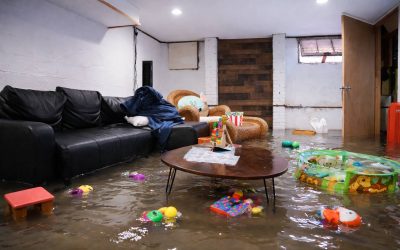
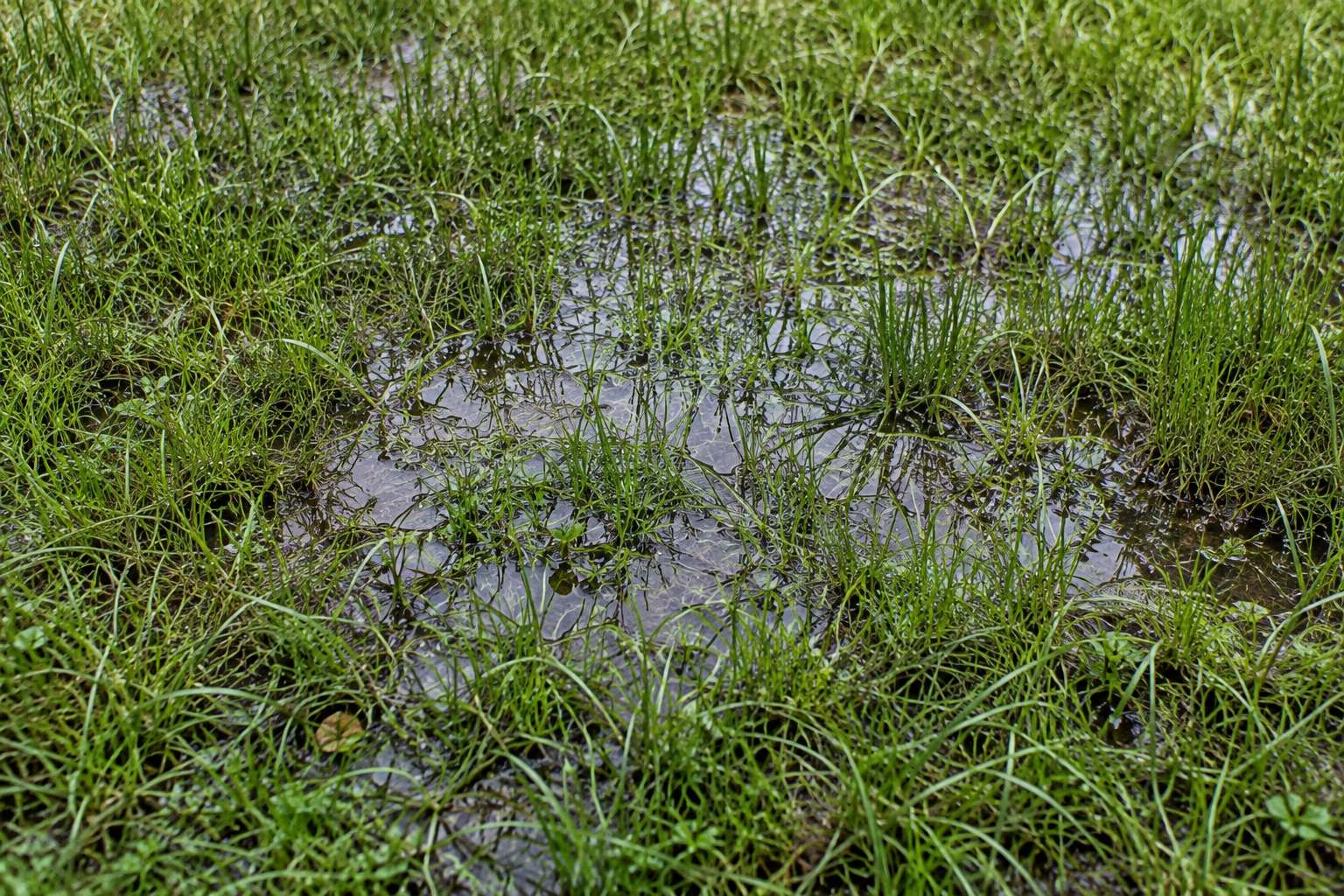
Your yard has a drainage problem if water pools in the same spots after every rainfall, your lawn stays soggy for more than 24–48 hours after moderate rain, you notice water collecting near your foundation, or your basement shows signs of moisture or flooding after heavy storms. Poor yard drainage is caused by a combination of factors including improper grading, compacted or clay-heavy soil, blocked or absent drainage infrastructure, and inadequate downspout management. Left unaddressed, yard drainage problems cause lawn disease, foundation damage, and basement flooding — all of which become significantly worse through Ontario’s wet fall season.
If puddles have been a persistent feature of your yard this summer, you’re not alone — and you’re not imagining it. Poor yard drainage is one of the most common property complaints BEST Plumbing & Drainage hears from homeowners and property managers across London and Southwestern Ontario. And late summer is actually the best time to address it.
Here’s why timing matters: the heavy rainfall events that cause the most drainage-related damage in this region tend to arrive in fall — the kind of sustained, high-volume storms that push poorly drained yards to their limits and send water toward foundations and into basements. Fixing your yard’s drainage now, before that season arrives, is the difference between a minor inconvenience and a major repair bill.
BEST Plumbing & Drainage has been serving London, Ontario and surrounding communities for over 50 years. In that time, we’ve assessed and repaired hundreds of residential and commercial drainage systems across the region. This guide walks through everything you need to know about yard drainage — how to identify the problem, what’s causing it, and which solutions actually work. For related reading, see our articles on 4 common yard drainage issues you can’t ignore and tips for solving lawn drainage issues.
Step 1: Identify Where the Water Is Coming From
Many homeowners assume that excessive rainfall is the only cause of yard drainage problems. In reality, heavy rain is often just the trigger that reveals a drainage system that was already inadequate. If your lawn floods after only a moderate rainfall — the kind that your neighbours’ yards handle without issue — the problem almost certainly lies in the design or condition of your drainage system rather than the volume of rainfall itself.
The most common sources of yard drainage problems in London and Southwestern Ontario include:
- Misdirected downspouts — one of the most common and most correctable causes. Downspouts that discharge water too close to the foundation, or that direct water toward a low point in the yard, contribute significantly to both pooling and basement moisture issues
- Improper yard grading — the ground around your home should slope away from the foundation at a rate of at least 6 inches over the first 10 feet. Many older properties in London have settled or were never properly graded, creating slopes that channel water toward the house
- Clay-heavy soil — London sits on significant clay deposits, and clay soil is notoriously poor at absorbing water. After it becomes saturated, additional rainfall has nowhere to go but across the surface
- Compacted soil — foot traffic, vehicle weight, and years of compression reduce soil’s ability to absorb water, regardless of its composition
- Blocked or absent drainage infrastructure — clogged catch basins, collapsed drainage pipes, or properties with no formal drainage system beyond surface slope
- Neighbouring property runoff — in dense residential areas, water from neighbouring properties can funnel onto yours if the surrounding grade directs it that way
Start your investigation after a moderate rainfall. Walk the property while it’s still wet and observe where water is moving, where it’s collecting, and how long it takes to clear. Track these observations across three or four different rain events — consistent pooling in the same locations is the clearest indicator of a structural drainage problem rather than a one-off event.
Step 2: Assess Where the Water Is Accumulating
Once you’ve identified where the water is coming from, the next step is understanding where it’s going — and where it’s getting stuck.
Key questions to answer during your assessment:
- Is the pooling isolated to one or two specific areas, or is there surface flooding across a wide area of the yard?
- Is water collecting near the foundation? This is the highest-priority situation — water at the foundation is the leading cause of basement moisture and flooding
- Are there areas where the ground stays wet and spongy for days after rain, suggesting poor deep drainage or a high water table?
- Do you notice water pooling at the base of your downspouts after heavy rain?
- Are there low spots in the yard that consistently collect water even when the rest of the yard has drained?
Mark problem areas with garden stakes or flags and photograph them during active rainfall events. The more information you can bring to a drainage contractor, the more accurately they can assess the situation and recommend the right solution. At BEST, when we assess a property, this kind of documented observation history helps us get to the right diagnosis faster.
If water is consistently collecting near your foundation or entering your basement after rain events, that situation warrants urgent attention — see our wet basement services page and our article on backwater valve installation in London, Ontario for related solutions.
Yard Drainage Solutions That Actually Work
Addressing yard drainage is not a one-size-fits-all exercise. The right solution depends on the specific cause of the problem, the size and layout of the property, the soil composition, and the severity of the drainage failure. Here’s a breakdown of the most effective solutions, from the simplest to the most comprehensive.
1. Correct Your Downspouts
This is often the first thing to check and the easiest to fix. Downspouts should extend at least 1.8 metres (6 feet) from the foundation and discharge onto ground that slopes away from the house. Extensions are inexpensive and can be installed in an afternoon. For more permanent solutions, underground downspout drains direct water further from the foundation through buried pipe — a highly effective option for properties where surface extensions aren’t practical. See This Old House’s guide on downspout drainage for additional context.
2. Regrade Problem Areas
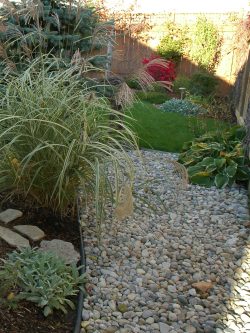
If your yard slopes toward the house — or if it’s essentially flat, with no slope to carry water away — regrading is often necessary. This involves adding and compacting soil to create the correct slope away from the foundation. Proper grading alone resolves a significant proportion of foundation moisture and yard pooling issues on older London properties. This is a job for a professional drainage contractor, as improper grading can make the situation worse.
3. Install French Drains
French drains are one of the most effective solutions for persistent pooling in specific yard areas. A French drain consists of a perforated pipe buried in a gravel-filled trench, positioned to intercept subsurface water and redirect it to a safe discharge point. They’re particularly effective in clay soil environments — like much of London, Ontario — where surface water can’t penetrate the soil quickly and needs to be actively redirected.
French drains can be installed to address localized low spots, to capture water along fence lines or at the base of slopes, or as a perimeter system around the foundation. BEST has installed French drain systems on hundreds of properties across London and Southwestern Ontario.
4. Add Swales and Ditches
For larger properties or lots with significant grade changes, swales — shallow, sloped channels that redirect surface runoff — are a practical and cost-effective solution. Properly designed swales guide water away from problem areas and toward appropriate discharge points without the cost of underground piping. They can be planted with grass or native vegetation to improve aesthetics and increase water absorption.
On farms and larger commercial properties, ditches provide a more substantial version of the same function — creating clear channels that handle high volumes of runoff and direct it toward drainage infrastructure or retention areas.
5. Install a Dry Well
A dry well is an underground structure — essentially a covered pit filled with gravel or containing a perforated container — that receives surface or subsurface water and allows it to gradually percolate into the surrounding soil. Dry wells are particularly effective for managing downspout discharge and are a good option when there’s no practical above-ground route to redirect water.
6. Create a Rain Garden
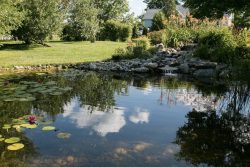
A rain garden is a planted depression designed to capture and absorb stormwater runoff. Planted with native species that tolerate both wet and dry conditions, rain gardens slow and filter runoff before it reaches storm drains or low-lying areas. They’re particularly effective at reducing the volume of runoff from roof areas and paved surfaces, and they add genuine landscape value to the property.
7. Install a Water Harvesting System
Rather than simply redirecting excess water, a water harvesting system captures it for reuse. Rain barrels connected to downspouts collect runoff for garden irrigation — a practical choice that reduces both drainage volume and outdoor water costs. For properties with larger storage needs, cisterns and underground storage tanks can capture substantial volumes of rainwater for landscape irrigation throughout the dry season.
8. Improve Soil Drainage with Gravel and Organic Matter
In garden beds and areas with chronic compaction, incorporating gravel or organic matter into the soil improves drainage at the surface level. This isn’t a solution for serious drainage failures, but it can meaningfully improve the performance of otherwise marginal areas and reduce surface pooling in garden beds and planted areas.
Why Late Summer Is the Right Time to Act
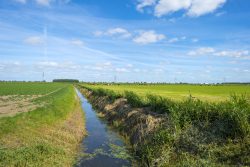
Ontario’s late summer and fall bring some of the highest-volume rainfall events of the year. The combination of heavy rain on already-saturated ground — compacted through summer use — is what pushes poorly drained yards to the point of flooding. September and October storms are consistently among the most damaging for properties with inadequate drainage infrastructure.
Addressing drainage problems in August and September gives contractors the working conditions they need — ground that’s accessible, not frozen, and plant material that won’t be disturbed by installation work. It also gives new drainage infrastructure time to settle and prove itself before the heaviest fall rains arrive.
Waiting until after a major flooding event to address drainage is almost always more expensive than acting before it. Foundation water damage, basement flooding cleanup, and the associated property damage consistently cost far more than the drainage work that would have prevented it. Contact BEST now for an assessment while we still have availability in our fall schedule.
Why London and Southwestern Ontario Property Owners Trust BEST
Over 50 Years of Local Experience
BEST Plumbing & Drainage was founded in London, Ontario in 1972 and has been serving this community for over five decades. We understand the specific drainage challenges of this region — the clay-heavy soil, the flat topography of many London neighbourhoods, the seasonal rainfall patterns, and the infrastructure considerations of both older and newer construction. That local knowledge informs every assessment and recommendation we make.
Full-Service Drainage Capability
Unlike contractors who specialize in only one type of drainage solution, BEST offers a complete range of drainage and sewer services — from surface drainage and French drains to underground pipe repair, stormwater management systems, and hydro vac excavation. This means we can assess your complete drainage picture and recommend integrated solutions rather than single-point fixes that don’t address the full scope of the problem.
A 20-Year Warranty on Qualifying Work
BEST stands behind our drainage work with a 20-year warranty on many of our services — one of the strongest in the industry. When we fix your drainage problem, we fix it properly, with materials and methods that are designed to perform over the long term. Our warranty gives you confidence that your investment is protected.
Residential and Commercial
We serve both residential and commercial properties across London, St. Thomas, Strathroy, Tillsonburg, Woodstock, Sarnia, and throughout Southwestern Ontario. Whether you’re a homeowner dealing with a soggy backyard or a property manager responsible for a commercial site with stormwater management obligations, our team has the experience and the equipment to handle it.
Honest Assessments and Transparent Pricing
Shawn Ashworth and the BEST team are known throughout London for straight answers and honest recommendations. We don’t recommend work that isn’t needed, and we explain our reasoning clearly so you can make an informed decision. That approach has earned us BBB accreditation and a client base that has trusted BEST for decades.
Don’t Wait for the Fall Rains to Find Out Your Drainage Isn’t Ready
If your yard has been showing drainage problems this summer — persistent puddles, soggy areas, water near the foundation — now is the time to have it assessed and addressed. Our fall schedule fills up quickly as property owners across London and Southwestern Ontario prepare for the wetter months ahead.
Contact BEST Plumbing & Drainage today for a free estimate. Call us at 519-438-6565 or complete our online request form. We serve London, Ontario and surrounding communities throughout Southwestern Ontario — and we’ve been doing it for over 50 years.
Frequently Asked Questions About Yard Drainage
How do I know if I have a yard drainage problem?
The clearest signs are water that pools in the same areas after every rainfall, a lawn that stays wet or spongy for more than 24–48 hours after moderate rain, visible water flow toward your foundation during or after rain, moisture or water staining in your basement after storms, and erosion channels or bare patches where water consistently flows. If you're seeing any of these consistently — not just after extraordinary rainfall — you have a structural drainage issue worth addressing.
What causes poor yard drainage in London, Ontario?
The most common causes in the London area are clay-heavy soil (which absorbs water slowly and becomes impermeable when saturated), improper yard grading that slopes toward the foundation, misdirected or inadequate downspouts, and compacted soil from years of foot or vehicle traffic. Older London neighbourhoods also often have aging drainage infrastructure that no longer functions as intended. A BEST drainage assessment identifies which combination of factors applies to your specific property.
Can I fix yard drainage problems myself?
Some minor corrections — extending downspouts, adding soil to address minor grading issues near the foundation, or installing a simple rain barrel — are manageable for a motivated homeowner. But most structural drainage problems require professional assessment and installation. Improper grading, incorrectly placed French drains, or drainage systems that discharge to the wrong location can make the problem worse. For anything beyond the most basic adjustments, a professional assessment from an experienced drainage contractor is the right starting point.
What is a French drain and do I need one?
A French drain is a perforated pipe buried in a gravel-filled trench that intercepts groundwater or surface water and redirects it to a safe discharge point. It's one of the most effective solutions for persistent yard pooling, particularly in clay soil environments. Whether you need one depends on where your water is coming from and where it's collecting — a property assessment will determine whether a French drain is the right tool for your specific situation.
How much does yard drainage repair cost in London, Ontario?
Drainage repair costs vary significantly depending on the scope of work. Simple downspout corrections or minor grading can cost a few hundred dollars. A French drain installation for a typical residential lot typically ranges from several hundred to a few thousand dollars depending on length and complexity. More extensive solutions involving underground pipe, stormwater management infrastructure, or foundation drainage work are priced based on the specific scope. BEST provides free estimates so you know what you're dealing with before committing to any work.
Will fixing my yard drainage also help my wet basement?
Often yes — surface and subsurface yard drainage is one of the primary contributors to basement moisture and flooding. Correcting how water moves across and through your yard, and ensuring it's directed well away from your foundation, reduces the hydrostatic pressure on basement walls and the volume of water that can find its way inside. In many cases, yard drainage corrections significantly reduce or eliminate basement moisture without requiring interior waterproofing work. See our wet basement services page for a full picture of basement moisture solutions.
What is the correct grading slope away from a house foundation?
The standard guideline is a minimum slope of 6 inches over the first 10 feet from the foundation — approximately a 5% grade. This ensures that surface water runs away from the house rather than pooling against the foundation wall. Many older London properties have settled or were never graded to this standard, which is why foundation moisture is such a common issue in established neighbourhoods. Regrading to the correct slope is one of the most effective and cost-efficient drainage improvements available.
How long does yard drainage installation take?
Simple corrections like downspout extensions or minor grading can be completed in a day. A French drain installation for a typical residential property generally takes one to two days. More complex drainage systems — those involving multiple drainage components, significant excavation, or stormwater management infrastructure — may take several days to a week. BEST provides a timeline estimate as part of the free quote process so you know what to expect before work begins.
Does BEST Drainage offer emergency drainage services?
Yes. BEST offers 24-hour emergency services for drainage situations that can't wait — active basement flooding, sewer backups, and other urgent drainage failures. Our 24-hour emergency line is available around the clock. For non-emergency drainage assessments and planned work, contact us during business hours to schedule a free estimate.
What is the BEST drainage warranty?
BEST offers a 20-year warranty on many of our drainage services — one of the strongest in the industry in Southwestern Ontario. The specific warranty terms depend on the type of work performed. Details are provided as part of every estimate and contract. Learn more on our warranty page.