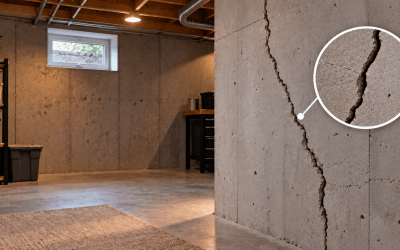
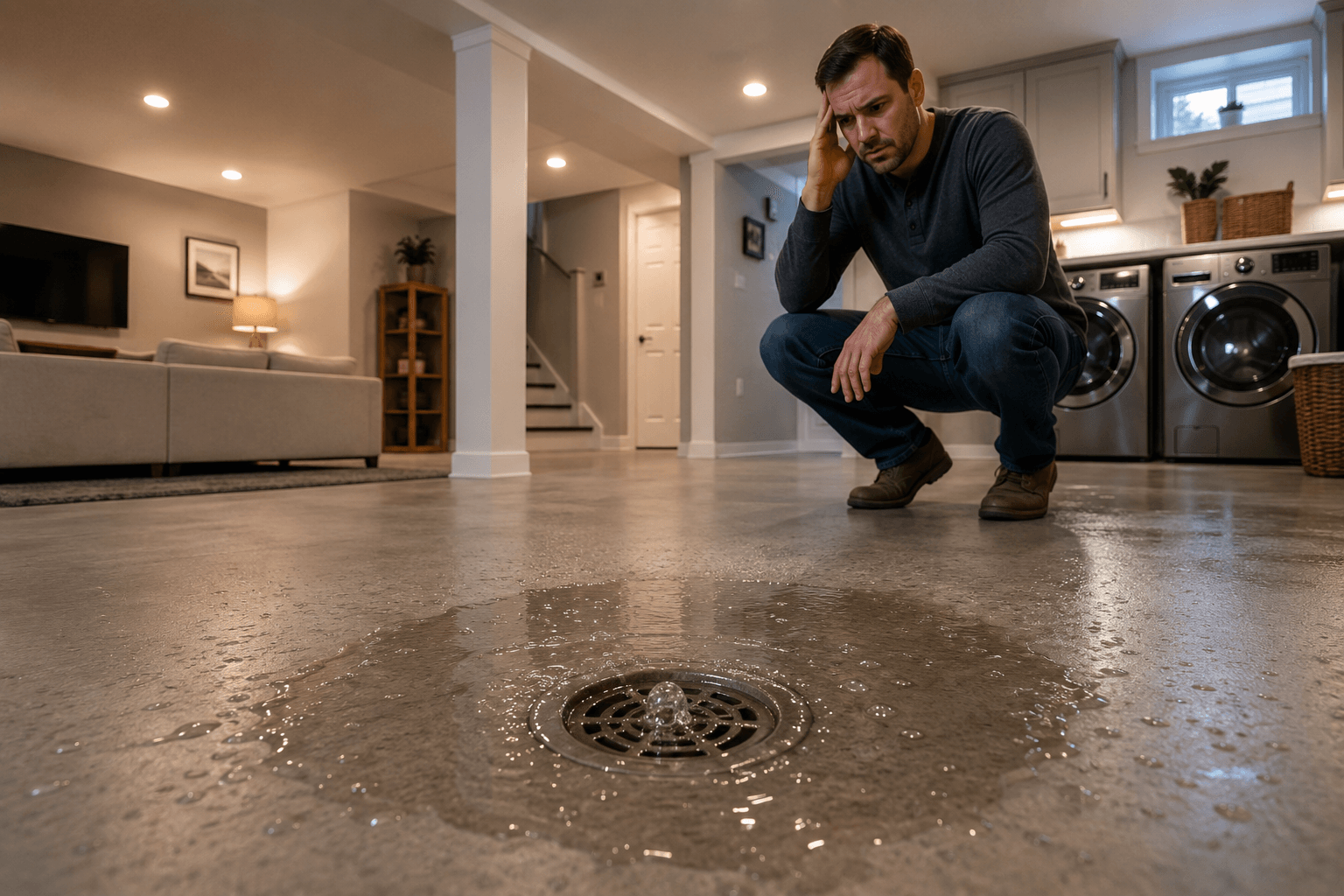
Why is my basement drain backing up?
A basement drain usually backs up because wastewater can’t flow through your home’s sewer system properly. The most common causes include clogged sewer lines, tree root intrusion, damaged or collapsed pipes, municipal sewer backups during heavy rain, grease buildup, or a blocked floor drain. A professional sewer camera inspection is often the fastest way to identify the exact cause before it leads to flooding or expensive repairs.
There’s never a good time to discover water coming up through your basement drain. Whether it’s after a heavy rainstorm, while doing laundry, or seemingly out of nowhere, a basement drain backup can quickly turn into a stressful and expensive situation.
For many homeowners, the basement is much more than a storage area. It’s a finished living space, home office, workshop, laundry room, or entertainment area. Even a small amount of water can damage flooring, drywall, furniture, and personal belongings, while creating the perfect environment for mould growth.
At BEST Plumbing & Drainage Contractors, we’ve been helping homeowners across London and Southwestern Ontario solve drain and sewer problems for more than 50 years. One thing we’ve learned is that a basement drain backup is rarely the actual problem—it’s usually a symptom of something happening deeper within your home’s plumbing or sewer system.
The good news is that most basement drain backups can be prevented when the underlying cause is identified early.
In this guide, we’ll explain why basement drains back up, what warning signs to watch for, and the professional solutions that can help keep your basement dry year-round.
How Your Basement Drainage System Works
Understanding why a basement drain backs up starts with knowing how your home’s plumbing system works.
Every sink, toilet, bathtub, shower, washing machine, and floor drain eventually connects to your home’s main sewer line. Wastewater flows through these pipes by gravity until it reaches the municipal sewer system.
Several important components help keep everything flowing properly.
- Drain traps prevent sewer gases from entering your home.
- Plumbing vents allow air into the drainage system so wastewater flows freely.
- Cleanouts provide access for drain cleaning and inspections.
- Proper pipe slope allows wastewater to travel efficiently toward the sewer.
Because the basement floor drain is usually the lowest plumbing fixture in the house, it’s often the first place you’ll notice a problem. When wastewater can’t leave your home, gravity causes it to back up through the lowest available opening.
10 Common Reasons Your Basement Drain Is Backing Up
-
A Clogged or Blocked Sewer Line
The most common cause of a basement drain backup is a blockage somewhere in your main sewer line and requires drain cleaning. Over time, grease, soap residue, food waste, paper products, and other debris accumulate inside the pipe. What begins as a minor restriction can gradually become a complete blockage. When wastewater has nowhere to go, it begins backing up into the home. Since the basement floor drain sits at the lowest point of your plumbing system, it’s often where the water first appears. If you’ve also noticed slow drains, gurgling toilets, or unpleasant sewer odours, your main sewer line may already be partially blocked.
-
Heavy Rain Has Overwhelmed the Municipal Sewer System
If your basement drain only backs up during heavy rainfall, the problem may not be inside your home at all.
During major storms, municipal sewer systems can become overwhelmed by the volume of stormwater entering the network. The City of London provides information about sewer systems, basement flooding prevention, and homeowner responsibilities during heavy rainfall.
Older neighbourhoods throughout London are especially susceptible because portions of the sewer infrastructure were built decades ago.
When the municipal sewer reaches capacity, wastewater may temporarily reverse direction and flow back toward nearby homes.
This is why many homeowners only experience basement drain backups after prolonged rainfall.
Installing a properly functioning backwater valve and maintaining your sewer line can significantly reduce this risk.
-
Tree Roots Have Invaded Your Sewer Line
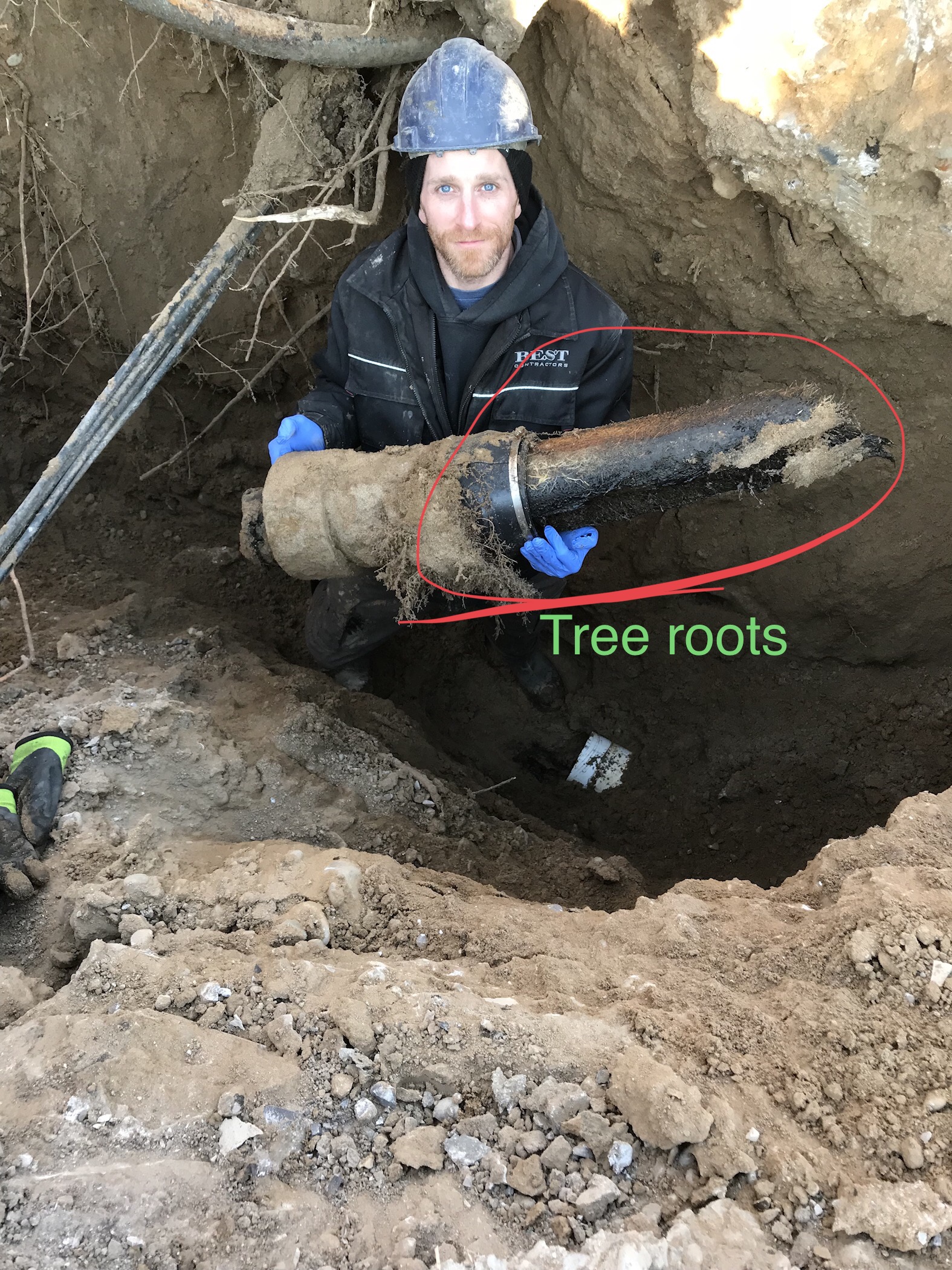
After more than five decades serving London homeowners, we’ve found that tree roots remain one of the leading causes of recurring sewer problems.
Roots naturally search for moisture. Even a tiny crack in an older sewer pipe can attract nearby tree roots.
Once inside the pipe, the roots continue growing until they trap toilet paper, grease, soap residue, and other debris. Eventually, wastewater can no longer flow freely through the sewer line.
Many homeowners don’t realize they have tree roots until the basement drain begins backing up.
Older neighbourhoods with mature trees are particularly susceptible to root intrusion because roots naturally seek moisture escaping from small cracks in sewer pipes.
Fortunately, modern sewer camera inspections make it easy to confirm whether roots are causing the blockage without unnecessary digging.
-
Grease, Wipes and Household Debris
Not every sewer blockage develops overnight.
Many occur gradually because of what goes down household drains every day.
Cooking grease may appear harmless when it’s hot, but it quickly hardens inside sewer pipes. Combine that with paper towels, “flushable” wipes, hygiene products, coffee grounds, and food particles, and you’ve created the perfect blockage.
Eventually, normal household water usage becomes enough to overwhelm the restricted pipe.
One of the easiest ways to protect your plumbing is to dispose of grease and wipes in the garbage—not the drain.
Related Article: 17 Things You Should Never Flush Down Your Toilet
-
Your Washing Machine Is Revealing a Hidden Problem
Does your basement drain only overflow when you’re doing laundry? If so, your washing machine probably isn’t the problem.
Modern washing machines discharge a large amount of water very quickly. If your main sewer line is already partially blocked, that sudden rush of water simply overwhelms the pipe.
The excess water often escapes through the basement floor drain because it’s the lowest outlet available.
Many homeowners ignore this early warning sign until a complete sewer backup occurs.
If your basement drain backs up every time the washing machine drains, it’s time to schedule a professional inspection before the blockage becomes worse.
-
Aging or Collapsed Sewer Pipes
Many homes throughout London still rely on sewer pipes installed decades ago.
Clay tile, cast iron, and other older materials naturally deteriorate over time. Ground movement, freeze-thaw cycles, and years of normal wear can cause pipes to crack, sag, or collapse.
A damaged sewer pipe acts like a kink in a garden hose. Wastewater slows down, debris accumulates, and eventually the line becomes blocked.
A video camera inspection allows plumbers to pinpoint the exact location of the damage and recommend the most cost-effective repair.
Should I worry if my basement drain only backs up once?
Yes. Even a single basement drain backup can indicate a developing sewer problem. Small blockages rarely fix themselves and usually become worse over time. Having the problem inspected early can help prevent basement flooding, sewage damage, mould growth, and costly repairs later.
-
A Failed or Missing Backwater Valve
A backwater valve is one of the best defences against sewage backing up into your home, yet many homeowners don’t realize they have one—or that it needs regular maintenance.
A backwater valve is installed on your home’s main sewer line and is designed to allow wastewater to flow out while preventing it from flowing back in. During periods of heavy rainfall or when the municipal sewer system becomes overloaded, the valve automatically closes to help stop sewage from entering your basement.
Unfortunately, backwater valves aren’t maintenance-free. Debris can prevent the valve from sealing properly, and older valves can wear out over time. If the valve fails, your basement becomes vulnerable to sewer backups during major storms.
If your neighbourhood has experienced sewer backups in the past, installing or maintaining a backwater valve is one of the smartest investments you can make to protect your home.
-
A Blocked Basement Floor Drain
Sometimes the problem isn’t your main sewer line at all.
Basement floor drains can become blocked with dirt, sand, lint, pet hair, soap residue, or even construction debris. While these blockages may seem minor, they can prevent water from draining properly when your plumbing system is under heavy use.
If water drains slowly or pools around the floor drain after using your washing machine or other plumbing fixtures, don’t ignore it. A slow drain today can easily become a flooded basement tomorrow.
Routine drain cleaning helps keep floor drains functioning properly and allows plumbing professionals to identify developing issues before they become emergencies.
-
Poor Pipe Slope or Improper Installation
Your home’s drainage system depends on gravity. Sewer pipes must be installed at the correct slope so wastewater flows smoothly toward the municipal sewer.
If the slope is too flat, water slows down and debris begins collecting inside the pipe. If the slope is too steep, water can move too quickly, leaving solids behind to create blockages.
Ground movement over time can also change the slope of older sewer lines, especially in established neighbourhoods throughout London.
While homeowners can’t usually see this type of problem, a sewer camera inspection can often identify areas where water is pooling instead of flowing properly.
-
Blocked Plumbing Vents
Most homeowners think only about the pipes carrying wastewater away from the home, but plumbing vents are equally important.
Plumbing vents allow air to enter the drainage system, preventing suction from slowing the movement of wastewater. If a vent becomes blocked by leaves, bird nests, ice, or other debris, drains throughout the home may begin working inefficiently.
Signs of a blocked plumbing vent include:
- Slow drains throughout the house
- Gurgling toilets
- Bubbling sinks
- Sewer odours
- Recurring basement drain backups
Fortunately, blocked vents can often be identified during a professional plumbing inspection before they cause more serious drainage problems.
How BEST Plumbing Diagnoses Basement Drain Backups
Because several different plumbing issues can produce the same symptoms, guessing at the cause often leads to unnecessary repairs and added expense.
At BEST Plumbing & Drainage Contractors, we believe in identifying the problem first.
Our technicians use advanced diagnostic equipment to inspect your entire drainage system before recommending a solution. This allows us to locate the exact cause of the backup and recommend the most effective repair—saving homeowners both time and money.
Depending on what we find, we may recommend:
- Professional drain cleaning
- Hydro jetting
- Sewer camera inspections
- Sewer line repair or replacement
- Tree root removal
- Backwater valve repair or installation
Professional Solutions for Basement Drain Backups
Hydro Jetting
Not all drain cleaning methods are created equal.
While traditional drain snaking is effective for many clogs, hydro jetting provides a much more thorough cleaning.
Hydro jetting uses highly pressurized water to scour the inside of your sewer pipes, removing grease, mineral buildup, sludge, soap residue, and even tree roots. Rather than simply punching a hole through the blockage, hydro jetting cleans the entire pipe wall, helping restore proper flow and reducing the likelihood of future blockages.
It’s one of the most effective long-term solutions for recurring sewer problems.
Sewer Camera Inspections
Many sewer problems can’t be diagnosed from the surface.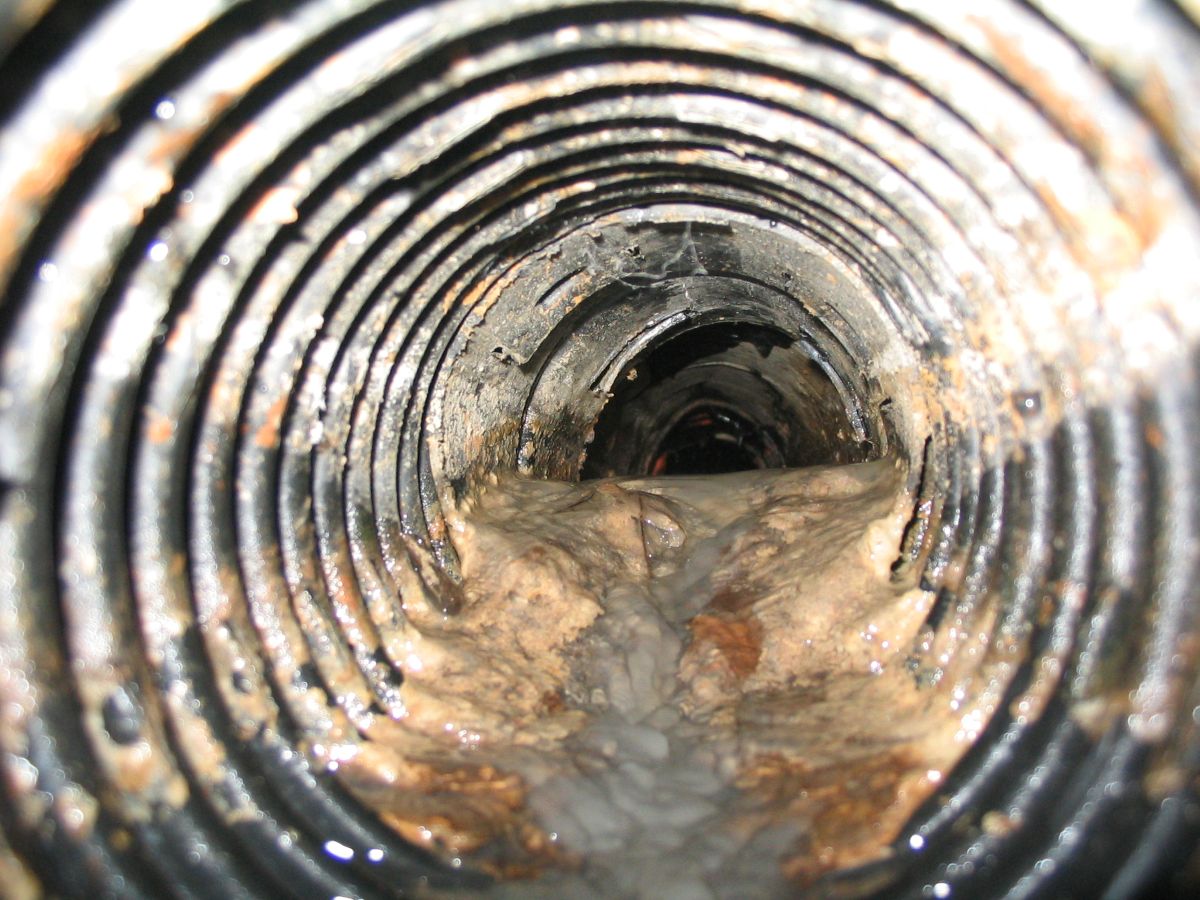
That’s why sewer camera inspections have become one of the most valuable diagnostic tools available.
A high-definition waterproof camera is inserted into the sewer line, allowing our technicians to inspect the entire pipe in real time.
This technology allows us to identify:
- Tree root intrusion
- Cracked or collapsed pipes
- Grease buildup
- Pipe separations
- Bellies (low spots)
- Foreign objects
- Blockages
Instead of guessing, we can show homeowners exactly what’s happening underground and recommend the most appropriate repair.
Sewer Line Repair
Sometimes cleaning alone isn’t enough.
If a sewer pipe has collapsed, cracked, or deteriorated beyond repair, replacing the damaged section may be the only permanent solution.
Our experienced technicians explain every option before work begins, ensuring homeowners understand both the immediate repair and any long-term recommendations.
Whenever possible, we recommend the least invasive solution that will permanently solve the problem.
How to Help Prevent Basement Drain Backups
Although some sewer problems develop without warning, many can be prevented through routine maintenance and good plumbing habits.
Here are a few simple ways to reduce your risk:
- Never pour grease or cooking oil down household drains.
- Avoid flushing wipes, paper towels, hygiene products, or other non-flushable items.
- Schedule routine drain cleaning if your home has older plumbing.
- Have your sewer line inspected if you’ve experienced previous backups.
- Keep gutters and downspouts directing water away from your foundation.
- Maintain your backwater valve.
- Address slow drains before they become complete blockages.
Keeping water away from your foundation is one of the simplest ways to reduce the risk of basement moisture problems. The Government of Ontario also provides practical guidance on emergency preparedness and reducing the risk of flooding around your home.
After serving homeowners across London for more than 50 years, we’ve found that preventative maintenance is almost always less expensive than repairing a flooded basement.
When Should You Call a Professional Plumber?
A slow-draining floor drain or the occasional gurgling toilet may not seem like a major concern, but these small warning signs often point to a developing sewer problem. Ignoring them can allow a minor blockage to become a complete sewer backup, resulting in costly water damage and an unexpected plumbing emergency.
You should contact a professional plumber if you notice:
- Water backing up through your basement floor drain
- Multiple drains in your home draining slowly
- Gurgling toilets or bubbling sinks
- Unpleasant sewer odours inside or outside your home
- Water around the basement floor drain after doing laundry
- Frequent drain clogs that keep returning
- Basement flooding after heavy rainfall
The sooner the problem is identified, the more options you’ll typically have for repairing it before significant damage occurs.
Why Homeowners Across London Trust BEST Plumbing & Drainage Contractors
For more than 50 years, BEST Plumbing & Drainage Contractors has been helping homeowners throughout London and Southwestern Ontario solve everything from simple drain clogs to complex sewer line failures.
We understand that every plumbing problem is different. That’s why we don’t believe in guesswork or one-size-fits-all solutions.
Instead, we take the time to inspect your plumbing system, identify the actual cause of the problem, and recommend the most effective long-term solution. Whether you need routine drain cleaning, hydro jetting, a sewer camera inspection, tree root removal, or complete sewer line repairs, our experienced technicians have the equipment and expertise to get the job done right.
Our goal isn’t simply to clear today’s blockage—it’s to help prevent tomorrow’s emergency.
Basement Drain Backing Up? We’re Here to Help.
If water is backing up through your basement drain, don’t wait for the problem to get worse. A minor blockage today can quickly become a flooded basement, damaged belongings, mould growth, and expensive repairs. The experienced team at BEST Plumbing & Drainage Contractors has been helping homeowners across London, St. Thomas, Strathroy, Woodstock, Middlesex County, and surrounding communities protect their homes for more than five decades.
Whether the cause is tree roots, a blocked sewer line, a damaged pipe, or an overloaded municipal sewer system, we’ll identify the problem and recommend the right solution. Call BEST Plumbing & Drainage Contractors today at (519) 438-6565 or request a quote online to schedule a professional inspection.
Frequently Asked Questions
Why is water coming up through my basement floor drain?
Water coming up through a basement floor drain usually means wastewater cannot leave your home through the main sewer line. Common causes include clogged sewer pipes, tree root intrusion, damaged sewer lines, or municipal sewer backups during heavy rainfall. A professional sewer camera inspection can identify the exact cause.
Why does my basement drain only back up when it rains?
If your basement drain only backs up during heavy rain, the municipal sewer system may be overwhelmed or your home's sewer line may already have a partial blockage. Heavy rainfall increases the volume of water entering the sewer system, making existing drainage problems much more noticeable.
Can tree roots really cause a basement drain backup?
Yes. Tree roots are one of the leading causes of sewer line blockages in older London neighbourhoods. Roots grow into tiny cracks in sewer pipes, eventually trapping grease, toilet paper, and other debris until wastewater can no longer flow properly.
Related Service: Sewer Camera Inspections
Why does my basement drain back up when my washing machine drains?
Modern washing machines discharge a large amount of water very quickly. If your sewer line is partially blocked, that sudden flow can overwhelm the pipe and force water back through the basement floor drain. This is often an early warning sign of a developing sewer blockage.
Is a basement drain backup considered an emergency?
Yes. Any sewage or wastewater entering your home should be treated as a plumbing emergency. Delaying repairs can result in water damage, mould growth, unpleasant odours, and costly structural repairs.
Can I unclog a basement floor drain myself?
Minor clogs near the drain may sometimes be cleared using a plunger or drain snake. However, recurring backups usually indicate a larger sewer line problem that requires professional equipment such as hydro jetting or a sewer camera inspection.
Related Article: How to Unclog Your Basement Drain
How do plumbers determine what’s causing a basement drain backup?
Professional plumbers typically perform a sewer camera inspection. A small waterproof camera is inserted into the sewer line to identify tree roots, blockages, collapsed pipes, grease buildup, or other issues affecting drainage.
What is hydro jetting?
Hydro jetting uses highly pressurized water to clean the inside of sewer pipes. It removes grease, sludge, mineral buildup, and tree roots while restoring the full diameter of the pipe. It's one of the most effective long-term solutions for recurring sewer blockages.
Related Service: Hydro Jetting
Can a backwater valve prevent basement flooding?
In many cases, yes. A properly installed and maintained backwater valve helps prevent wastewater from flowing back into your home when municipal sewer systems become overloaded during heavy rainfall.
How often should I have my sewer line inspected?
If your home is more than 25 years old, has mature trees on the property, or you've experienced previous drain problems, it's a good idea to have your sewer line inspected every few years. Routine inspections often identify small issues before they become major repairs.
Does homeowners insurance cover basement drain backups?
Coverage varies depending on your policy. Many insurers offer optional sewer backup coverage, but it isn't always included in a standard homeowners policy. The Insurance Bureau of Canada offers helpful information about sewer backup coverage and questions homeowners should ask their insurance provider.
How can I prevent my basement drain from backing up?
The best way to prevent future drain backups is through routine maintenance. Avoid pouring grease down drains, never flush wipes or hygiene products, schedule professional drain cleaning when needed, maintain your backwater valve, and have your sewer line inspected if you notice slow drains or recurring clogs.
Serving London, St. Thomas, Strathroy, Woodstock, Middlesex County & Surrounding Communities