Why Does My Basement Drain Keep Backing Up?
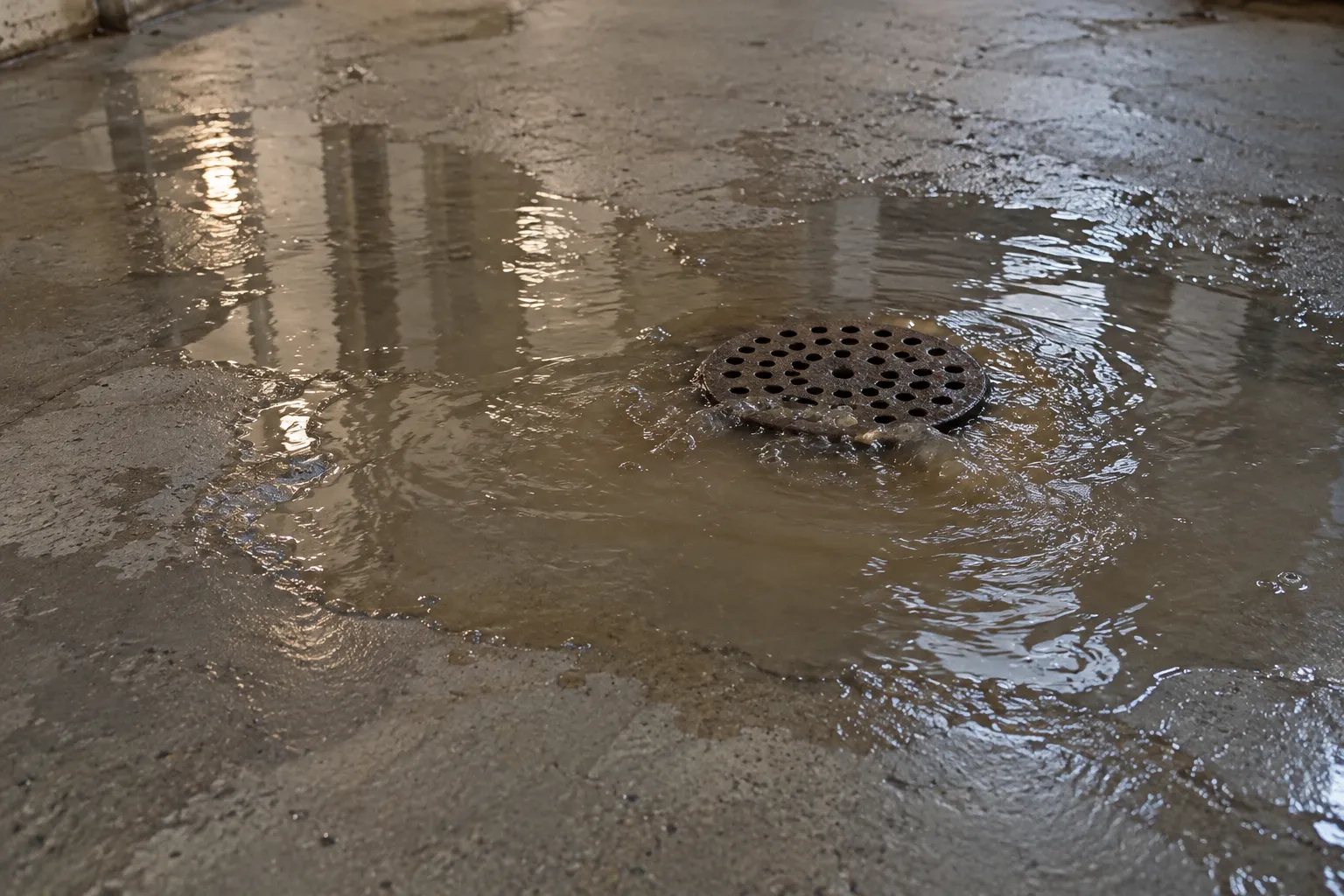
A basement drain that backs up repeatedly is almost always a sign of a blockage or restriction somewhere in your home’s sewer system — not a random plumbing quirk. The most common causes are a buildup of grease, debris, or tree roots in the main sewer line, a collapsed or broken pipe, or a failing sewer system that needs cleaning or repair. A one-time backup during heavy rain might be a fluke. A drain that keeps backing up is telling you something is wrong — and it won’t fix itself.
There’s nothing quite like the sinking feeling of walking into your basement and finding water backing up out of your floor drain. Again.
If it’s happened more than once, you already know that mopping it up isn’t a solution. The water comes back. Maybe it’s only after a load of laundry. Maybe it happens when you flush the toilet upstairs. Maybe it seems to come out of nowhere. Whatever the pattern, one thing is consistent: your basement drain is telling you something is wrong with your sewer system.
BEST Plumbing & Drainage has been diagnosing and fixing basement drain problems in London and Southwestern Ontario for over 50 years. Here’s what we see most often — and what you need to do about it. For urgent situations, call us anytime at 519-438-6565.
First — Understand How Your Basement Drain Works
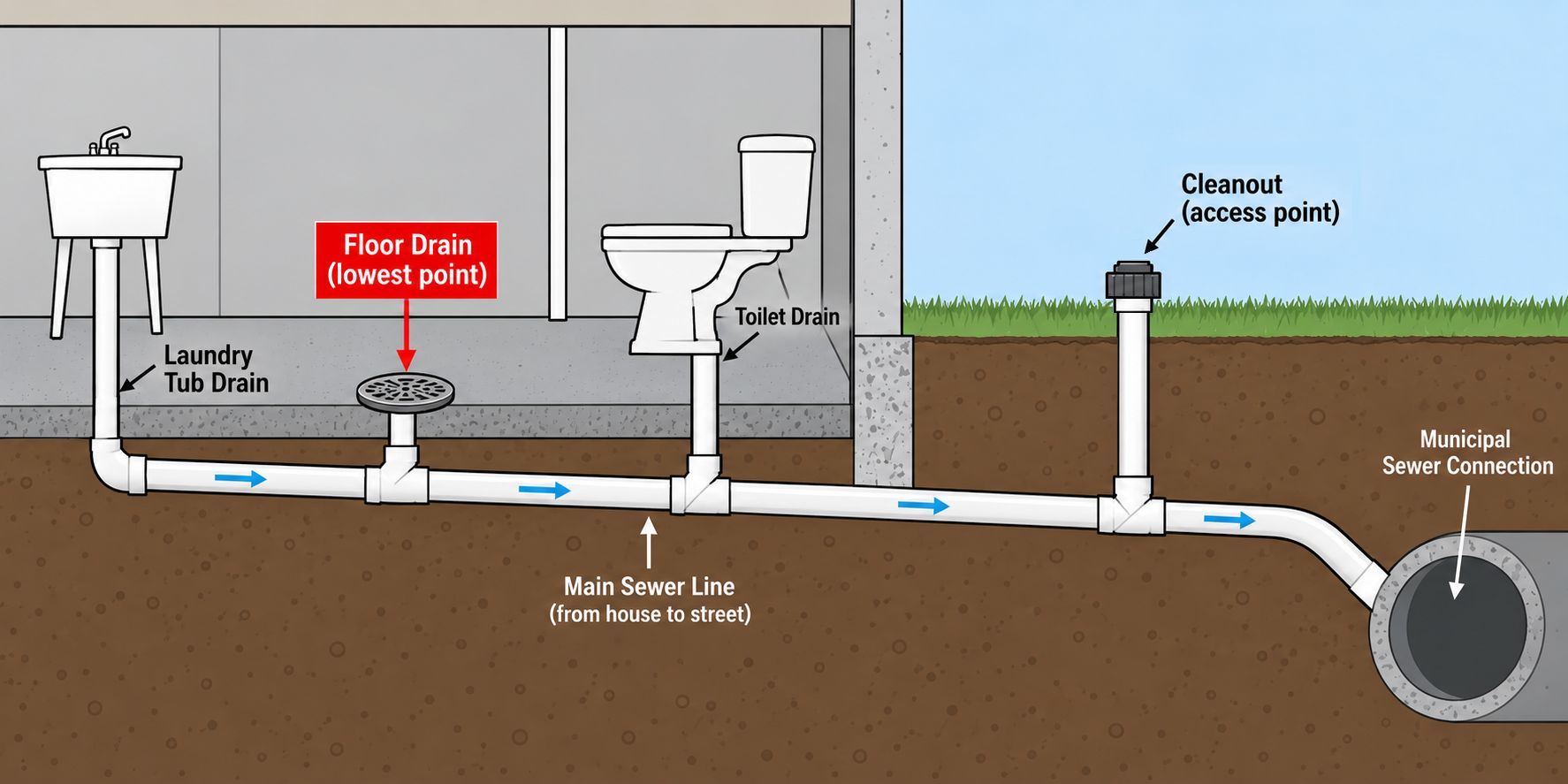
Your basement floor drain is connected to your home’s main sewer line — the pipe that carries all wastewater away from your house to the municipal sewer system. It sits at the lowest point of your drainage system for a reason: it’s a safety valve. When something goes wrong further down the line and water has nowhere to go, it backs up through the lowest available opening — which is almost always that basement floor drain.
So when your basement drain backs up, the problem usually isn’t the drain itself. It’s something further downstream. That’s important to understand, because it means clearing the drain opening won’t fix it. You need to find and address the actual blockage. Our drains and sewers service page covers the full range of solutions BEST offers.
The Most Common Reasons a Basement Drain Keeps Backing Up
1. A Partial Blockage in the Main Sewer Line
This is the most common cause we see. Grease, soap scum, hair, and debris accumulate on the walls of your sewer pipe over years and gradually narrow the passageway. Eventually, the line gets restricted enough that heavy water use — a shower running, a load of laundry, flushing multiple times in a row — overwhelms its capacity and water backs up. Professional drain cleaning in London is the right solution for most partial blockages.
A partial blockage tends to get worse over time. What starts as occasional backups during heavy use becomes more frequent, and eventually more severe. Getting the line professionally cleaned before it becomes a full blockage is always cheaper than dealing with it after the fact.
2. Tree Roots in the Sewer Line
This is more common than most homeowners expect — especially in London’s older neighbourhoods where large trees have had decades to grow. Tree roots are naturally drawn to the moisture and nutrients in sewer pipes. They find tiny cracks or joint gaps, work their way in, and over time grow into a mass that catches debris and causes repeated backups.
Root intrusion won’t go away on its own. A professional drain cleaning can clear the roots temporarily, but if the pipe is significantly damaged, repair or replacement may be the right long-term call.
3. A Collapsed or Damaged Pipe
Older London homes — particularly those with clay or Orangeburg sewer pipes — are susceptible to pipe collapse, cracking, and joint separation over time. A damaged pipe creates a low spot where debris collects, or an outright blockage where flow stops entirely. This can’t be cleaned away. It requires repair or replacement.
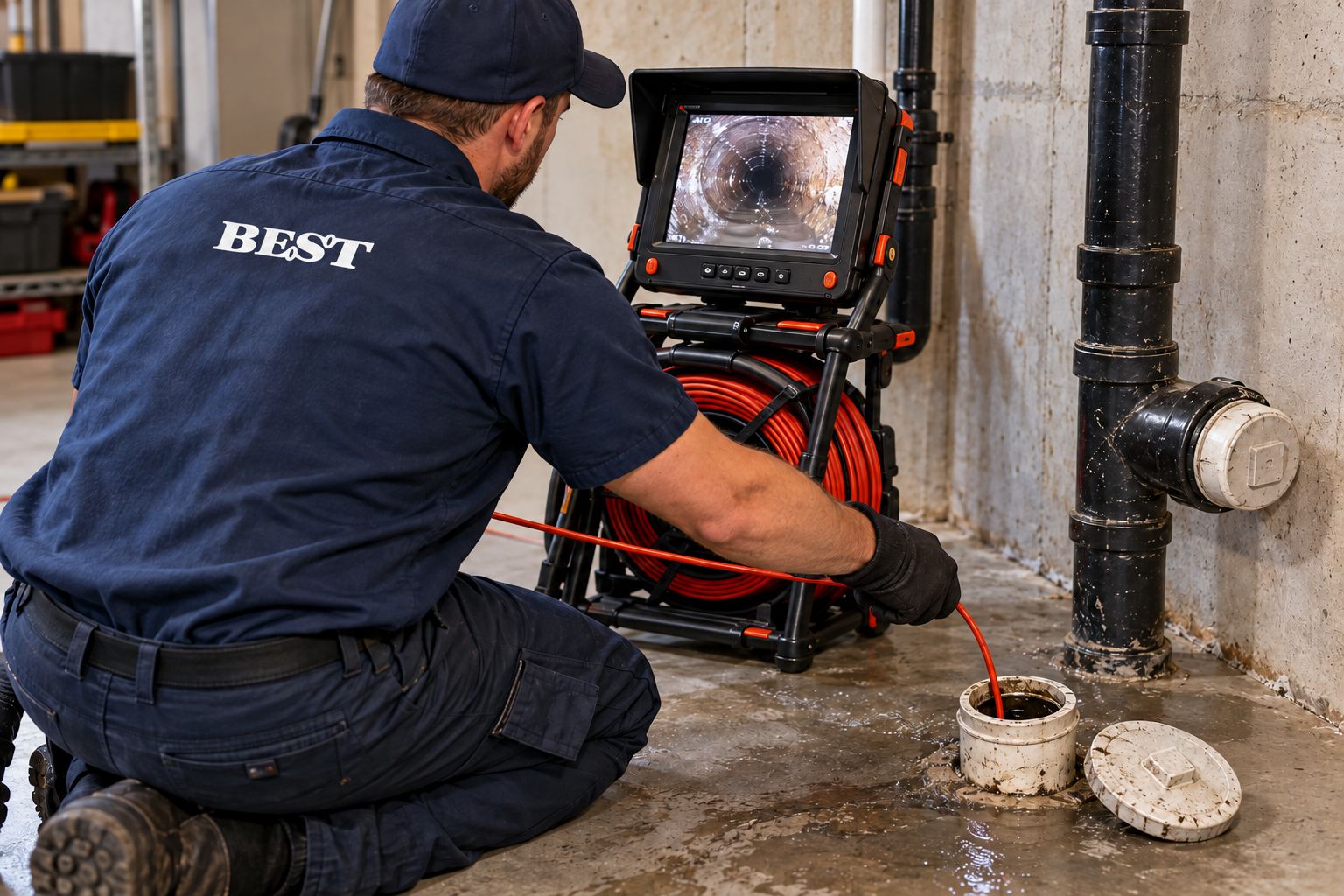
The only way to know for certain whether you have pipe damage is a video camera inspection — a camera run through the line that shows exactly what’s happening inside your pipes. If we haven’t done one in your home, it’s the first thing we recommend when a backup keeps recurring.
4. A Blocked or Malfunctioning Backwater Valve
If your home has a backwater valve — a device that prevents municipal sewer backups from entering your home — and it’s partially blocked or stuck, it can restrict flow and cause your basement drain to back up. Backwater valves need to be inspected and cleaned periodically. Learn more about backwater valve installation in London, or give us a call if you’re not sure whether yours is working.
5. The Municipal Sewer System Is Overwhelmed
If your backups happen specifically during or right after heavy rainfall, the problem may not be inside your home at all. When the municipal sewer system gets overwhelmed by stormwater, it can back up into private connections — including yours. This is a different problem that requires a different solution, and it’s worth paying attention to whether your backups have a clear weather pattern.
What to Do When Your Basement Drain Backs Up
- Don’t ignore it — even a single backup can indicate a developing sewer problem. Repeated backups mean the problem is already developing.
- Note the pattern — does it happen after laundry? After a shower? During rain? When multiple fixtures are used at once? This information helps diagnose the cause.
- Skip the chemical drain cleaners — they don’t clear sewer line blockages and can damage older pipes.
- Stop running water — if the drain is actively backing up, minimize water use in the house until the line is assessed.
- Call a professional — a camera inspection and professional drain cleaning is the only reliable way to diagnose and fix a recurring backup.
How BEST Diagnoses and Fixes a Recurring Basement Drain Backup
When you call BEST about a recurring basement drain backup, here’s how we approach it:
- We start with a video camera inspection to see exactly what’s happening inside your sewer line — blockage, root intrusion, pipe damage, or collapse
- Based on what we find, we recommend the right solution — high-pressure hydro jetting to clear a blockage, root cutting and cleaning, or pipe repair or relining if there’s structural damage
- We explain clearly what we’ve found, what your options are, and what each one costs before any work begins
- For homes at risk of municipal sewer backups, we discuss backwater valve installation as a preventive measure
We’re available 24 hours a day for emergency drain situations. Call 519-438-6565 or request a service call online.
Why London Homeowners Call BEST
A backed-up basement drain is stressful. It’s messy. And if it keeps happening, it can seriously damage your home. BEST has been handling exactly these situations in London and Southwestern Ontario since 1972. Here’s why homeowners call us.
- Three generations, over 50 years. BEST was founded in 1972 by John Ashworth as a one-man operation. His son Shawn joined as a teenager and now runs the business — still hands-on, still on job sites. That continuity means something: the knowledge, the reputation, and the relationships built over five decades are still here every day.
- We show up and we follow through. Work is done on an agreed schedule. We are not satisfied until you are. That’s not a tagline — it’s been the standard since 1972.
- Licensed, insured, and accountable. BEST carries full licensing and insurance. We’re listed with the Better Business Bureau and hold a Contractor Check badge. You can verify who you’re inviting into your home.
- A 20-year warranty on qualifying work. Most contractors don’t offer anything close to this. The first 10 years of our waterproofing warranty are fully transferable to the next owner — real protection that adds real value to your home.
- Available when you need us. 24-hour service, 365 days a year. Same-day service is available. When your basement is flooding, you don’t want to wait until Monday morning.
From flood to flow, we’ve got you covered. When your basement drain is backing up, call BEST at 519-438-6565 — 24 hours a day, 365 days a year. Same-day service is available. We’ll find the problem and fix it right.
Frequently Asked Questions
Is it an emergency if my basement drain backs up?
It depends on the severity. If wastewater is actively overflowing onto your basement floor, that’s a health hazard — call us immediately. Read our sewer backup emergency guide to understand what to do while you wait for help. If it’s a recurring slow backup that clears on its own, it’s urgent but not an immediate emergency. Either way, it shouldn’t be left indefinitely.
Can I fix a basement drain backup myself?
You can try snaking the drain to clear a blockage close to the drain opening. See our guide on how to unclog your basement drain for safe DIY steps. But if the problem keeps coming back, the blockage is further down in the main sewer pipe — where consumer-grade tools can’t reach effectively. A professional hydro jetting service and camera inspection is the right approach for a recurring backup.
How much does it cost to fix a basement drain backup in London, Ontario?
A professional drain cleaning typically runs between $200 and $500 depending on the method and severity. If a camera inspection reveals pipe damage requiring repair or replacement, costs are higher and depend on the extent of the damage. BEST provides a clear assessment and written estimate before any work begins.
How do I know if tree roots are in my sewer line?
The most reliable way is a video camera inspection — it shows exactly what’s inside your pipes. Warning signs that suggest roots include backups that clear temporarily but keep returning, gurgling sounds from drains, and slow drains throughout the house. Read our article on 3 signs your sewer lines are blocked for more detail.
What is a backwater valve and do I need one?
A backwater valve is a device installed in your sewer line that allows wastewater to flow out but prevents it from flowing back in — protecting your basement from municipal sewer backups during heavy rain events. Many London homes benefit from one, particularly in areas prone to sewer surcharge during storms. Learn more about backwater valve installation or ask us whether it makes sense for your property.