Foundation Cracks in Your Basement: What They Mean and When to Worry
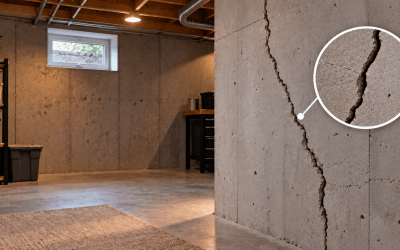
You’re moving storage bins, or finally starting that basement reno, and there it is. A crack running down the foundation wall. Your stomach drops a little.
Take a breath. Most basement foundation cracks are not an emergency. Concrete cracks. It’s almost a rule. But some cracks are your home’s way of telling you something is wrong, and those are worth taking seriously.
In this guide, we’ll walk you through the common types of foundation cracks, what each one usually means, and how to tell the difference between “keep an eye on it” and “call someone this week.”
The Short Answer
Most thin, vertical hairline cracks in a poured concrete basement wall come from normal shrinkage and settling, and they’re usually not a structural concern. You should worry when a crack is wider than 1/4 inch (about 6 mm), runs horizontally, forms a stair-step pattern in a block wall, keeps getting bigger, or lets water into your basement. Those signs point to soil pressure, water problems, or movement that needs a professional look.
Why Do Basement Foundations Crack in the First Place?
Concrete is strong, but it isn’t flexible. When something pushes, pulls, or shifts, it cracks. Here are the most common reasons:
- Curing shrinkage. As fresh concrete dries, it shrinks a little. That’s why many homes develop small cracks within the first year or two.
- Normal settling. Every house settles slightly into the soil beneath it. A bit of movement is expected.
- Freeze-thaw cycles. Southwestern Ontario winters are hard on foundations. Water in the soil freezes, expands, and pushes against your walls. Then it thaws and does it all over again.
- Hydrostatic pressure. When the soil around your home is soaked, water presses against the foundation from outside. Over time, that pressure can crack walls and force water through any weak spot.
- Poor drainage. Clogged gutters, short downspouts, a yard that slopes toward the house, or failing weeping tile all send more water at your foundation than it was built to handle.
Many neighbourhoods in London and the surrounding area also sit on clay-heavy soil. Clay swells when it’s wet and shrinks when it dries, which adds even more push-and-pull on your basement walls.
Types of Foundation Cracks and What They Mean
Not all cracks are created equal. The direction, width, and location tell you a lot.
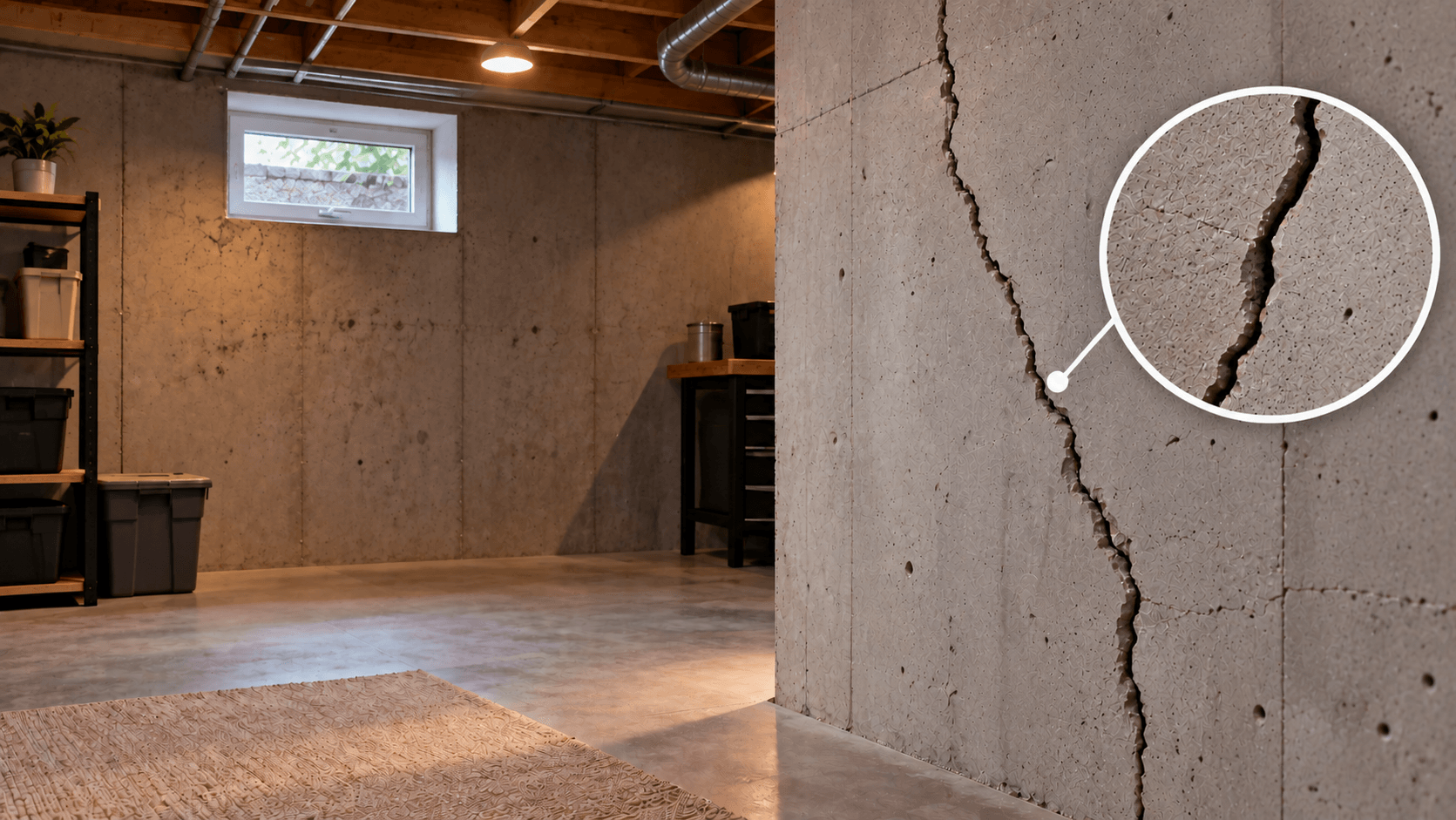
Hairline Vertical Cracks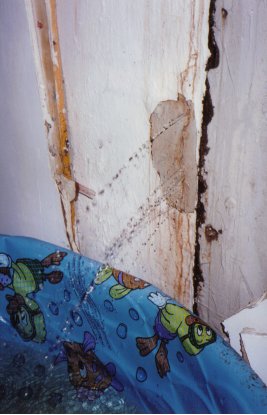
These are thin, straight cracks that run up and down (or slightly off vertical) in a poured concrete wall. They’re the most common type, and they usually come from shrinkage as the concrete cured.
Worry level: Low. If it stays dry and isn’t growing, it’s mostly cosmetic. If it starts to seep water, it needs to be sealed.
Diagonal Cracks
Diagonal cracks often start at a corner or near a window and run at an angle. They’re usually caused by uneven settling, when one part of the house settles a bit more than another.
Worry level: Low to moderate. A thin diagonal crack is often harmless. A wide one, or one that’s noticeably wider at one end, can point to ongoing movement and deserves a closer look.
Stair-Step Cracks in Block Walls
If your basement walls are made of concrete block (you’ll see the rectangular pattern), cracks tend to follow the mortar joints in a stair-step shape.
Worry level: Moderate to high. Small step cracks can come from minor settling. But if blocks are shifting, the wall is bulging, or the crack is wide, soil pressure may be moving the wall.
Horizontal Cracks
A crack running sideways across the wall is the one to take most seriously. Horizontal cracks usually mean pressure from outside, often from saturated soil or frost, is pushing the wall inward.
Worry level: High. If you also see the wall bowing or leaning, call a professional soon. Serious horizontal cracks often need a structural engineer’s assessment, and the water problem behind them has to be fixed too.
Basement Floor Cracks
Thin cracks in a basement floor slab are very common. Your floor isn’t holding up the house the way your walls are, so most floor cracks are simply from shrinkage.
Worry level: Low, unless one side of the crack is higher than the other, the crack is wide, or water is coming up through it.
Cracks Around Windows, Pipes, and Tie Rods
Openings in the foundation are natural weak spots. You’ll often see cracks near basement windows, where pipes pass through the wall, or at the small metal tie rods left over from construction.
Worry level: Low to moderate. These are rarely structural, but they’re one of the most common places for water to sneak in.
Foundation Cracks at a Glance
| Crack Type | What It Usually Means | Worry Level |
| Hairline vertical (poured wall) | Normal shrinkage | Low |
| Thin diagonal | Minor uneven settling | Low to moderate |
| Stair-step (block wall) | Settling or soil pressure | Moderate to high |
| Horizontal | Outside soil or water pressure | High |
| Hairline floor crack | Shrinkage | Low |
| Any crack that leaks | Water is getting through | Fix it soon |
When Should You Worry About a Foundation Crack?
Here’s the short list. Call a professional if you notice any of these:
- The crack is wider than 1/4 inch (about 6 mm).
- It runs horizontally, or forms a wide stair-step pattern in a block wall.
- One side of the crack sits higher or further out than the other.
- The wall is bowing, bulging, or leaning.
- The crack is getting longer or wider over weeks or months.
- You see water, damp spots, or white chalky residue (efflorescence) along the crack.
- Doors and windows upstairs start sticking, or new drywall cracks appear.
- There’s a musty smell or signs of mould near the wall.
One more thing. A crack that lets water in is a problem even if it’s tiny. Water is what turns a harmless crack into mould, damaged drywall, and ruined belongings. Here’s why you should deal with a wet or leaky basement promptly.
How to Monitor a Crack Yourself
If the crack looks minor, the best thing you can do is watch it. It only takes a few minutes:
- Mark both ends of the crack with a pencil and write the date beside it.
- Take a photo with a ruler or coin next to it, so you can compare the size later.
- Check it after heavy rain and during the spring thaw, when water pressure is highest.
- Look again every month or two. If it grows past your marks, it’s time to call.
While you’re at it, take a walk around the outside of your home. Make sure gutters are clear, downspouts carry water at least 1.8 metres (6 feet) away from the house, and the ground slopes away from your foundation. Small fixes outside can take a lot of pressure off your walls. Our tips for solving yard drainage issues are a good place to start.
Can You Fix a Foundation Crack Yourself?
Hardware stores sell crack-sealing kits, and for a dry hairline crack, a DIY patch may be fine for looks. But there’s a catch.
Patches and caulk applied from the inside don’t stop water that’s being pushed in from outside. Water often finds its way around the patch, or the crack opens up again when the ground moves. Worse, a patch can hide the very crack you should be watching.
If the crack is leaking, growing, or horizontal, skip the DIY and get it assessed.
How Professionals Repair Leaking Foundation Cracks
The right repair depends on what’s causing the crack and where the water is coming from. Common options include:
- Crack injection. A material such as polyurethane or epoxy is injected into the crack from inside, filling it through the full thickness of the wall. It works well for leaking cracks in poured concrete.
- Exterior waterproofing. The soil is dug out along the outside of the wall, the crack is repaired, and a waterproof membrane is applied. This stops water where it starts.
- Weeping tile repair or replacement. If the drainage around your footing is clogged or collapsed, water builds up against the wall. Fixing it relieves the pressure.
- Sump pump installation. A sump pump gives collected water somewhere to go before it can cause trouble.
- Structural repair. For bowing walls or serious horizontal cracks, a structural engineer may recommend reinforcement. Waterproofing is then done so the problem doesn’t come back.
Not sure whether your wall should be fixed from the inside or the outside? We break it down in Is It Better to Fix a Wet Basement from the Inside or Outside? For a deeper technical read, Canada Mortgage and Housing Corporation’s A Guide to Fixing Your Damp Basement is also a helpful resource.
Buying or Selling a Home with Foundation Cracks?
Cracks come up a lot during home inspections. A crack doesn’t automatically mean you should walk away, but it does mean you should ask questions. Is it dry? Has it been repaired? Is the repair covered by a warranty that transfers to the new owner?
That last question matters more than people think. It’s one reason BEST’s work comes with a 20-year warranty, with the first 10 years transferable. For more on this, read Should You Buy a Home with a Wet Basement?
Get a Straight Answer About Your Foundation Crack
Since 1972, BEST Plumbing and Drainage Contractors has been helping homeowners across London and Southwestern Ontario keep their basements dry. We’ll look at your crack, tell you honestly whether it needs attention, and walk you through your options if it does.
Our wet basement repairs are done by a licensed, insured team and backed by a 20-year warranty. Water coming in right now? We offer 24-hour emergency service.
Call 519-438-6565 or Request a quote online
Frequently Asked Questions
Are cracks in a basement foundation normal?
Yes, small ones are. Thin vertical hairline cracks are very common in poured concrete walls and usually come from shrinkage as the concrete cured. They’re only a concern if they leak, widen, or change over time.
How wide does a foundation crack have to be before I should worry?
A good rule of thumb is 1/4 inch (about 6 mm). Cracks wider than that, or cracks that keep getting wider, should be looked at by a professional. Width matters less than direction, though. Even a narrow horizontal crack deserves attention.
Are horizontal foundation cracks worse than vertical cracks?
Usually, yes. Vertical cracks tend to come from shrinkage or settling. Horizontal cracks usually mean soil or water pressure is pushing the wall inward, which can lead to bowing and structural damage if it isn’t addressed.
Can a foundation crack cause a wet basement?
Absolutely. Cracks are one of the most common ways water gets into a basement, especially during heavy rain and the spring thaw. Even a small crack can let in enough water to cause mould, stained walls, and damaged flooring.
Do foundation cracks get worse in winter?
They can. Freeze-thaw cycles cause the soil around your foundation to expand and contract, which puts extra stress on your walls. Many homeowners in Southwestern Ontario first notice new cracks or leaks in late winter and early spring.
Should a foundation crack be sealed from the inside or the outside?
It depends on the crack and the water source. Crack injection from the inside works well for many leaking cracks in poured concrete. Exterior waterproofing stops water before it reaches the wall and is often the better long-term fix when there’s ongoing water pressure or drainage failure.
Can I just use caulk or hydraulic cement on a foundation crack?
For a dry, cosmetic hairline crack, a DIY patch may be fine. For a crack that leaks, the patch often fails because water is being pushed in from outside. It can also hide changes in the crack that you’d want to catch early.
How long does it take to repair a foundation crack?
A crack injection is often completed in a few hours. Exterior waterproofing takes longer because the soil has to be excavated along the wall. Your contractor should give you a clear timeline after assessing the crack.
Will home insurance cover foundation crack repair?
It depends on your policy and the cause. Many policies don’t cover cracks from gradual settling or wear, but some cover sudden water damage. Check with your insurance provider before repairs begin.
Does BEST repair leaking foundation cracks in London, Ontario?
Yes. BEST Plumbing and Drainage Contractors repairs leaking basement cracks and provides wet basement waterproofing across London and Southwestern Ontario. Call 519-438-6565 or request a quote online to book an assessment.