
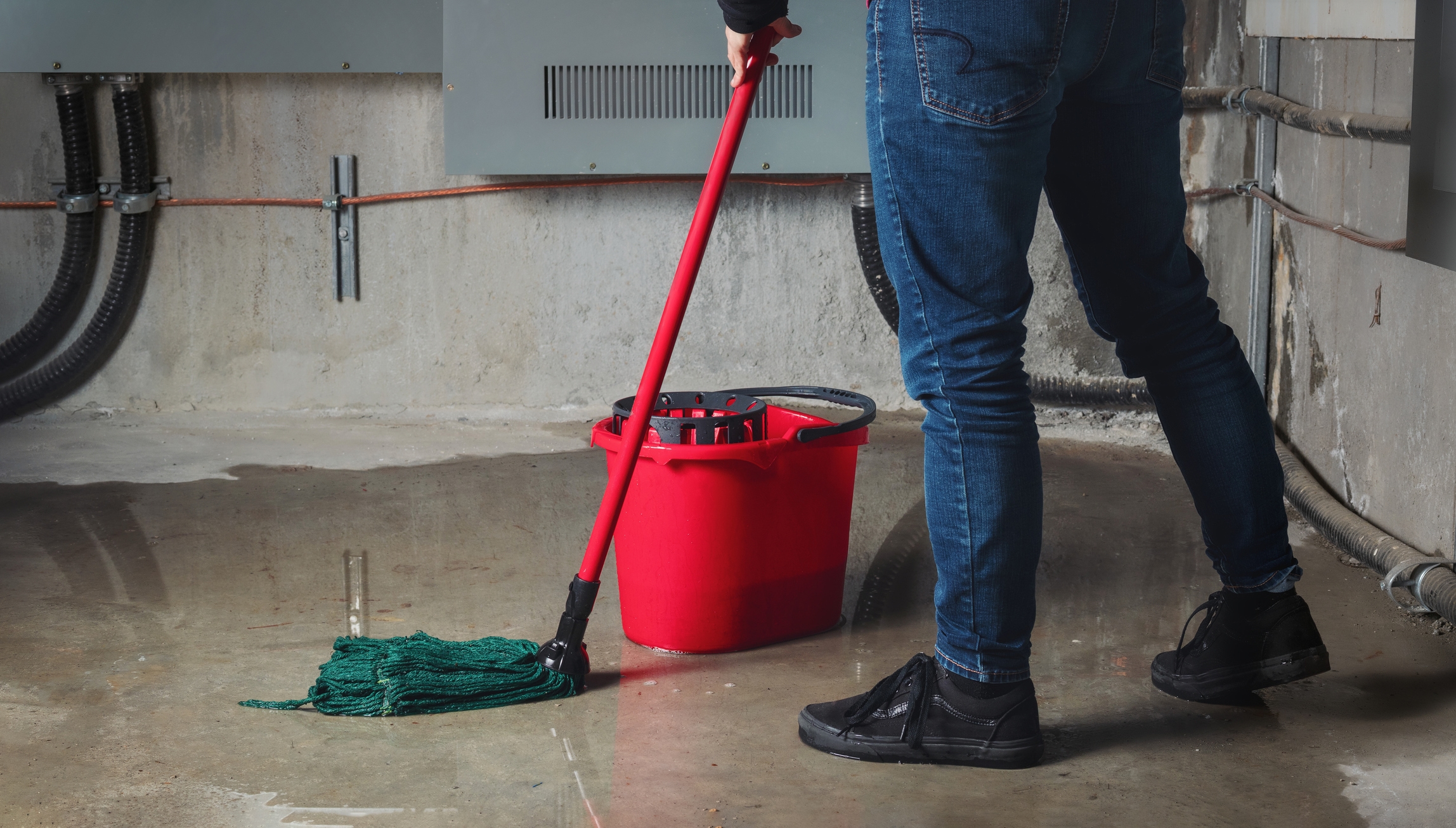
If you’ve caught a musty smell drifting up from your basement, or noticed dark fuzzy spots creeping across a wall, you’re dealing with mould — and it’s not something to put off. Basement mould isn’t just unsightly. It can trigger allergies and breathing problems, ruin stored belongings, and quietly chip away at the structure of your home the longer it’s left alone.
The good news is that mould is almost always a symptom of a bigger problem: moisture that has nowhere to go. Once you understand where that moisture is coming from, dealing with the mould — and keeping it from coming back — gets a lot more straightforward. Here’s what you need to know.
What Causes Mould to Grow in a Basement?
 Basements are basically built for mould. They’re cool, dark, often poorly ventilated, and sit below ground level where moisture naturally collects. Take away the sunlight and airflow that would normally help a space dry out, and you’ve got the perfect breeding ground.
Most basement mould problems trace back to one of three sources:
Condensation
When warm, humid air meets a cold surface — a basement wall, a pipe, a window — the moisture in that air condenses into water droplets. Over time, that buildup creates exactly the damp surface mould needs to take hold.
Flooding
A flooded basement is one of the fastest routes to a serious mould problem. Water that sits for even a day or two — especially after a heavy storm or sewer backup — soaks into walls, flooring, and anything stored nearby. If your basement has flooded, getting proper basement waterproofing in place matters more than just cleaning up the water.
Leaks
Leaking pipes, hairline cracks in your foundation, or a window well that isn’t sealed properly can all let moisture creep in slowly — often without you noticing until mould has already started growing. Regular inspections are the best way to catch these before they become bigger problems.
How to Tell If You Have Mould in Your Basement

Mould has a habit of hiding until it’s already spread. The first clue is almost always a smell — that musty, damp odour that doesn’t go away with a quick clean. If you notice it, don’t wait around. Mould releases spores into the air, and breathing them in regularly isn’t good for anyone in your home.
A couple of things worth checking:
- Moisture signs — water stains, damp patches, or peeling paint on walls, floors, or ceilings
- Organic materials — wood framing, carpet, insulation, and drywall are mould magnets. Look for discolouration or fuzzy texture
Mould tends to show up in predictable spots: behind drywall, inside wall cavities, on wooden framing, in stored cardboard boxes, and around pipes, ducts, and vents. If you’re not sure whether what you’re seeing is mould or just an old water stain, it’s worth having someone take a look rather than guessing.
How to Prevent Mould From Coming Back
Removing mould without fixing the moisture problem behind it is a short-term fix. The mould will be back. Here’s what actually keeps it away for good.
Fix Leaking Walls Properly
A sealant might buy you some time, but it’s rarely a real solution. If water is finding its way through your basement walls, proper waterproofing addresses the root of the problem instead of just masking it. Contact our team for an assessment.
Keep Humidity Under Control
Mould needs moisture in the air, not just on surfaces, to thrive. Keeping your basement’s humidity below roughly 55% — using a dehumidifier or improving ventilation — makes the environment far less hospitable for it.
Clean Regularly
Dust and dirt give mould something to feed on. A weekly vacuum and a quick wipe-down of surfaces goes a long way toward keeping your basement inhospitable to mould growth.
Watch Your Landscaping
If the ground around your foundation slopes toward your house instead of away from it, rainwater has nowhere to go but in. Proper grading and a solid drainage system keep water moving away from your foundation instead of pooling against it.
How to Safely Remove Mould Yourself
For small, contained mould patches, you can often handle the cleanup yourself. For anything larger, it’s worth calling in a professional — disturbing a large mould colony can release spores throughout your home.
- Protect yourself. Wear gloves, an N95 respirator mask, and goggles before you start.
- Ventilate the space. Open windows and doors to keep air moving and moisture levels down.
- Clean the area. Soap and water works for small spots. For tougher mould, a mix of one cup of bleach to one gallon of water does the job — just never mix bleach with other cleaning products.
- Dry it completely. Any moisture left behind gives mould an open invitation to return.
If the mould covers a large area, or keeps coming back no matter what you try, that’s a sign the underlying moisture issue needs professional attention — not just another round of cleaning.
Why Mould Keeps Coming Back If You Don’t Fix the Source
Here’s the part most people miss: mould removal and moisture control are two different jobs. You can scrub every visible trace of mould off a wall, and if the moisture that caused it is still getting in, it’ll be back within weeks.
At BEST Plumbing and Drainage, mould remediation itself isn’t our specialty — fixing the moisture problem behind it is. We focus on wet basement repair and basement waterproofing, and sealing the leaks that are letting water in in the first place. Once that’s addressed, the environment mould needs to grow simply isn’t there anymore.
With over 50 years serving London and Southwestern Ontario and a 20-year warranty backing our work, we build solutions meant to last — not just patch the problem for a season.
Dealing With Basement Mould Right Now?
If your basement has flooded, is showing signs of chronic moisture, or you’re tired of mould coming back no matter what you try, let’s get to the root of it. Our team will identify exactly where the moisture is coming from and put a permanent fix in place.
Frequently Asked Questions
Is basement mould dangerous to my health?
Yes, it can be. Mould releases spores into the air that can trigger allergic reactions, respiratory irritation, and worsen asthma symptoms — especially with prolonged exposure. While reactions vary from person to person, it's best to treat any noticeable mould growth as something to address promptly rather than ignore.
How quickly can mould grow after a basement floods?
Mould can begin developing within 24 to 48 hours of standing water or excess moisture being present. This is why fast action after a flood — drying the area thoroughly and addressing the source of the water — matters so much in preventing a mould problem from taking hold.
Can I just paint over basement mould?
No — painting over mould without removing it first traps the problem rather than solving it. The mould will continue to grow underneath the paint, and the underlying moisture issue will remain unaddressed. Mould needs to be properly cleaned and the moisture source resolved before any painting or finishing work.
What does basement mould smell like?
Basement mould typically produces a musty, earthy odour that lingers even after cleaning. If you notice this smell and can't immediately identify a visible source, it's worth investigating further, as mould can grow behind walls or under flooring where it isn't visible.
Does a dehumidifier get rid of mould?
A dehumidifier helps control the humidity levels that allow mould to thrive, which makes it a useful prevention tool. However, it won't remove existing mould growth on its own. Active mould needs to be physically cleaned or professionally remediated, with a dehumidifier helping to prevent it from returning afterward.
How do I know if my mould problem requires a professional?
Small, isolated patches — typically less than about one square metre — can often be handled with DIY cleaning methods. Larger affected areas, mould that keeps returning despite cleaning, or any mould resulting from a significant flood or long-term leak are signs it's time to bring in a professional to address both the mould and its underlying cause.
Will basement waterproofing get rid of my mould problem for good?
Waterproofing addresses the moisture source that allows mould to grow in the first place, which is the most effective long-term solution. Existing mould still needs to be properly cleaned or remediated, but once the moisture problem is resolved through proper waterproofing, the conditions mould needs to return are eliminated.
How much does it cost to fix a mould problem caused by a wet basement?
Costs vary widely depending on the extent of the mould, the source of the moisture, and the waterproofing solution required. The best way to get an accurate picture is a professional assessment — contact our team to evaluate your specific situation and get a clear, customized quote.