What’s the Difference Between Interior and Exterior Basement Waterproofing?
Exterior waterproofing addresses water at the source — outside the foundation wall, before it can enter your basement. Interior waterproofing manages water that’s already getting in — redirecting it to a drainage system and out of the home before it causes damage. Exterior waterproofing is the more comprehensive and permanent solution but involves significant excavation and cost. Interior waterproofing is less invasive, more affordable, and highly effective for many London homes — but it doesn’t stop water from reaching the foundation wall. The right choice depends on where your water is coming from, the condition of your foundation, and your budget.
If you’ve been told you need basement waterproofing — or if you’ve been researching it yourself — you’ve probably run into both terms and wondered what the actual difference is.
It’s a fair question. And the answer matters, because the wrong approach for your situation won’t solve the problem. We’ve seen homeowners spend money on the wrong solution because they didn’t get an honest assessment first. We don’t want that to happen to you.
BEST Plumbing & Drainage has been waterproofing basements in London and Southwestern Ontario for over 50 years. Here’s a plain-language breakdown of both methods. You might also want to read our related article: Is it better to fix a wet basement from the inside or outside? For an in-person look at your specific situation, call 519-438-6565.
Exterior Waterproofing: Stop Water at the Source
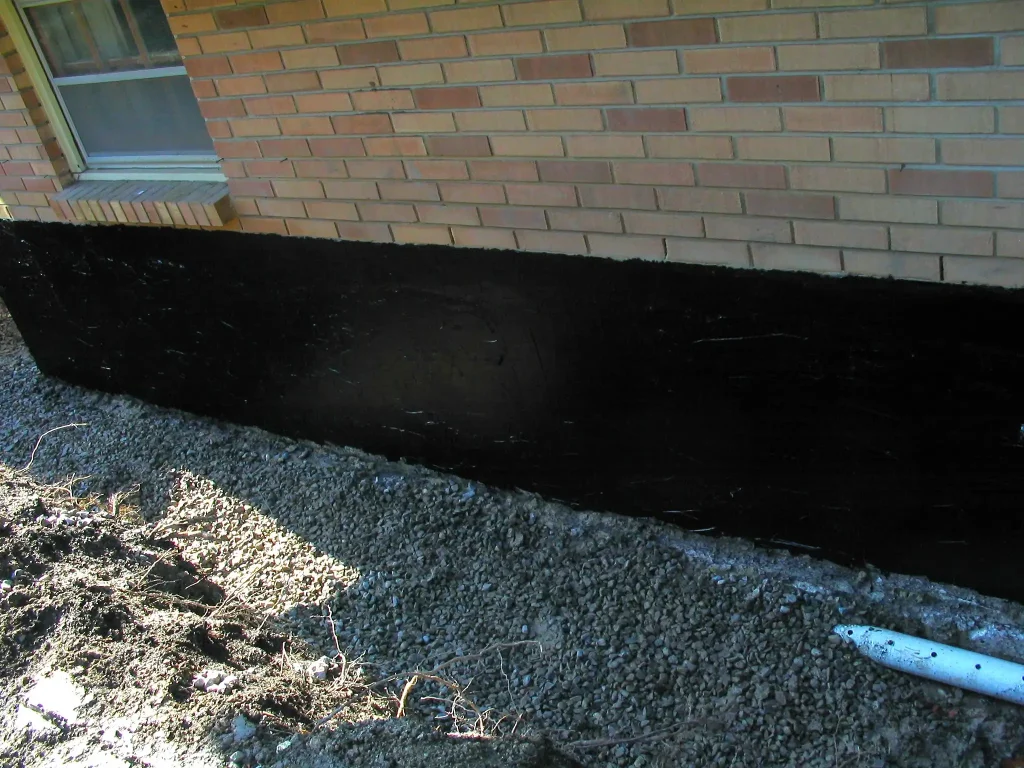
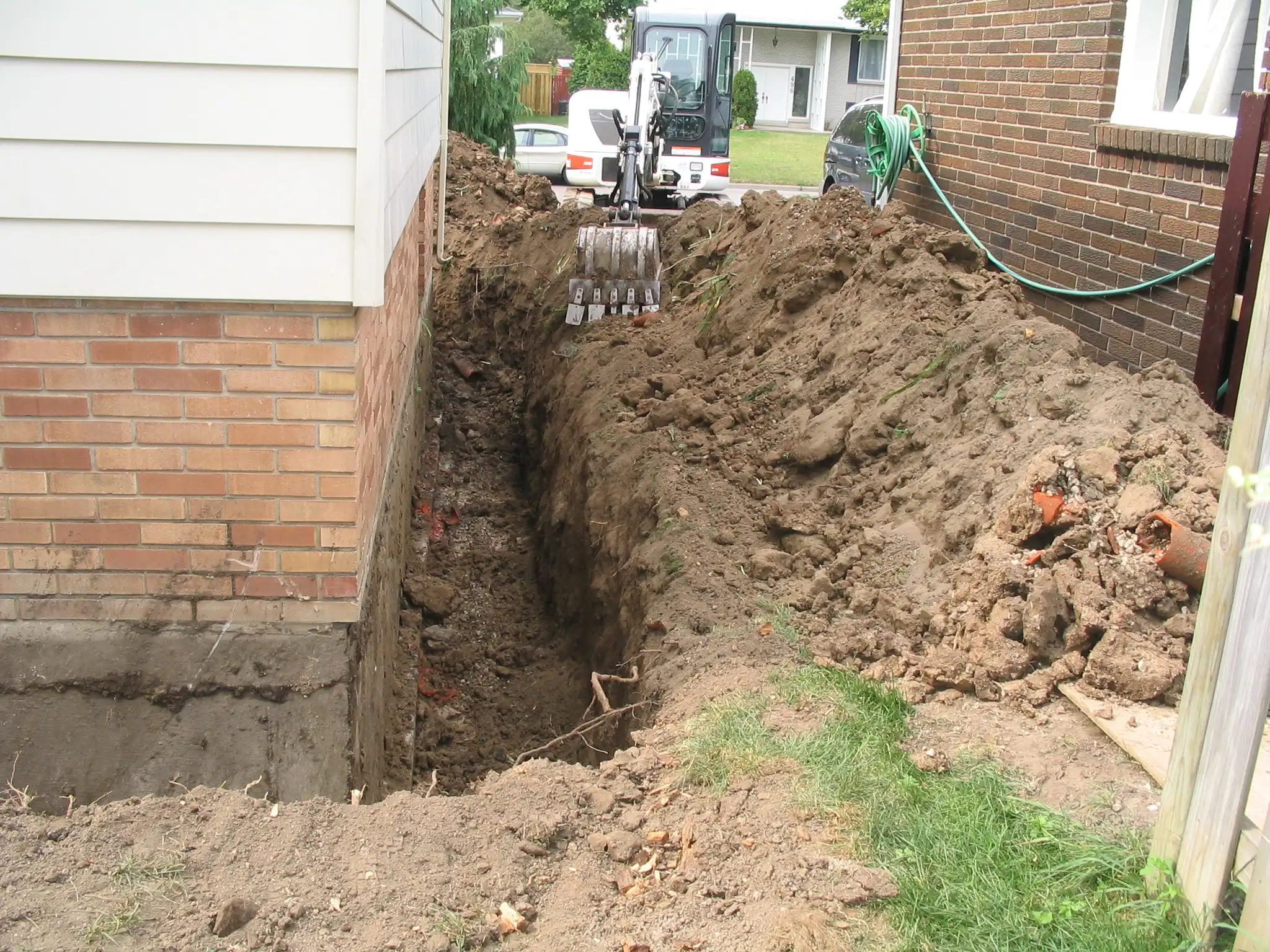
Exterior waterproofing means going outside — literally. The process involves excavating the soil around your foundation all the way down to the footing, applying a waterproof membrane or coating to the exterior foundation wall, installing or replacing the weeping tile (drainage pipe) at the base of the foundation, and backfilling with clean stone to promote drainage away from the wall.
The goal is to prevent water from ever reaching your foundation wall in the first place. When done properly, it’s the most comprehensive waterproofing solution available.
When Exterior Waterproofing Makes Sense
- The existing waterproofing membrane on your foundation has failed — common in London homes 30+ years old
- Your weeping tile is collapsed, blocked, or non-functional — a frequent finding in our older housing stock
- You’re already doing significant excavation for another reason, such as a home addition or major foundation repair
- Water is entering through the foundation wall itself, not just through cracks or the floor-wall joint
- You want the most permanent, comprehensive solution and the budget and disruption are manageable
The Honest Drawbacks of Exterior Waterproofing
- Full excavation around the home — significant disruption to landscaping, decks, driveways, and gardens
- The most expensive option — typically $15,000 to $50,000+ depending on the home and extent of work
- Longer completion time than interior solutions
- Not always practical — on dense urban lots or homes with attached structures, full exterior excavation may be difficult
Interior Waterproofing: Manage Water That Gets In
Interior waterproofing doesn’t stop water from reaching your foundation — it manages water that has already penetrated and directs it safely away before it can pool on your basement floor or damage your belongings.
The most common interior waterproofing system involves installing a drainage channel (also called a French drain or interior weeping tile) along the perimeter of the basement floor, at or near the footing. Water that enters through the wall-floor joint or through the floor itself is captured by this channel and directed to a sump pit, where a sump pump removes it from the house.
Interior systems may also include wall drainage panels that channel water running down the inside of the foundation wall into the floor drainage system, keeping it off the floor entirely. For more on managing water through walls, see our article on how to stop water seepage through basement concrete walls.
When Interior Waterproofing Makes Sense
- Water is entering primarily through the floor-wall joint or through hydrostatic pressure from below — both very common in London’s clay-heavy soil
- Exterior excavation isn’t practical due to your property layout, existing landscaping, or attached structures
- Your foundation is structurally sound but the existing waterproofing system is no longer keeping water out
- Budget is a factor and the more affordable interior option is the practical choice
- You want relatively quick installation with minimal disruption outside the home
The Honest Drawbacks of Interior Waterproofing
- It doesn’t stop water from reaching the foundation wall — it manages water after it arrives
- If there’s active water pressure against the wall, interior waterproofing addresses the symptom rather than the cause
- Requires cutting into the concrete floor along the perimeter — construction disruption inside the basement
- The sump pump is a mechanical component that requires maintenance and can fail — a battery backup is recommended
What About Foundation Crack Injection?
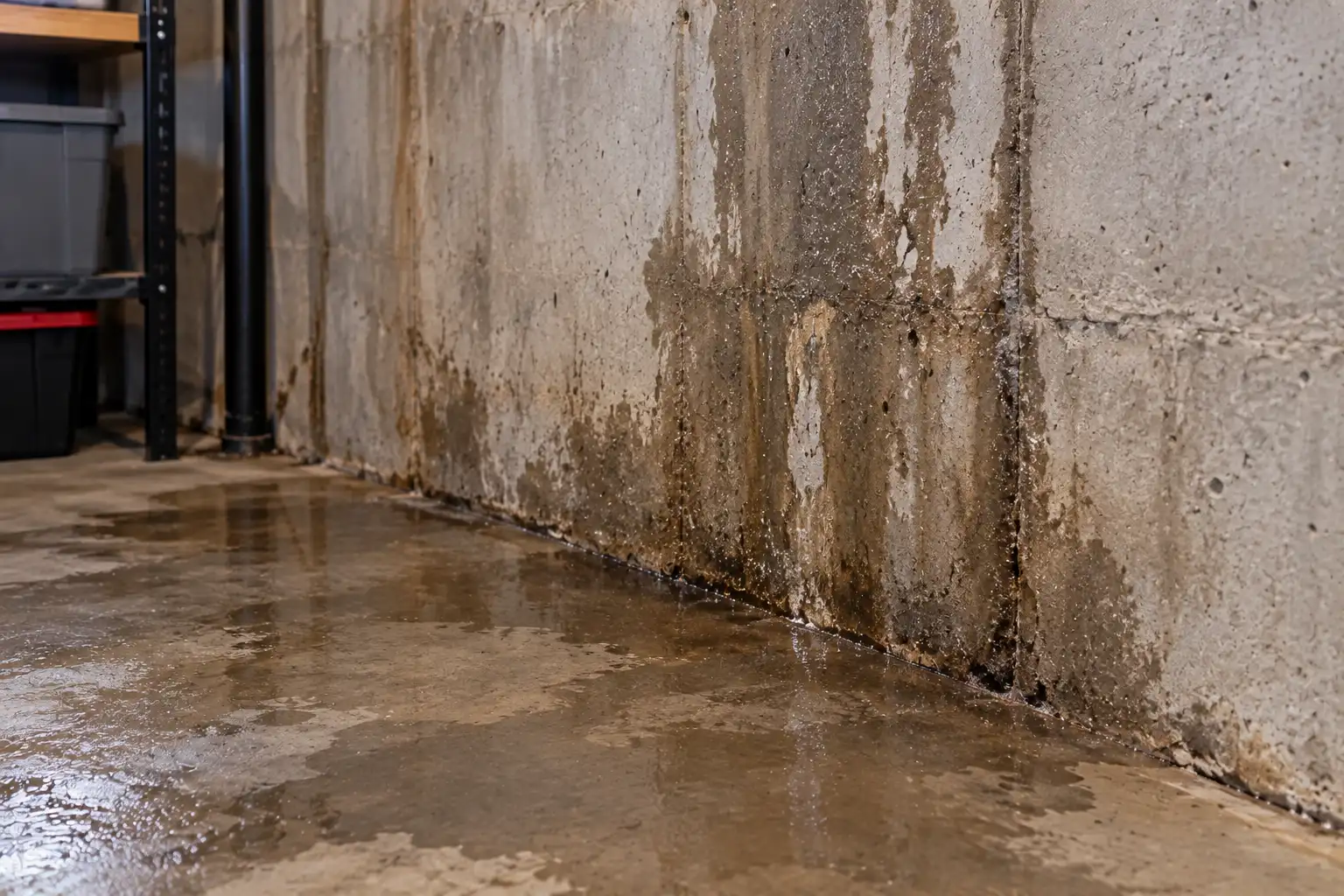
A third option — often overlooked — is crack injection. If water is entering through a specific crack in your foundation wall (rather than through hydrostatic pressure or failed weeping tile), injecting that crack with polyurethane or epoxy can seal the leak at its source. It’s significantly less expensive than either a full exterior or interior waterproofing system. Read our article on basement foundation cracks — when to worry for guidance on what kinds of cracks signal a structural problem vs. a sealing job.
Not every wet basement needs a major waterproofing system. Sometimes it just needs a crack properly sealed — or it can be fixed entirely from the inside. See our article on whether you can waterproof your basement without digging for more on that option. Talk to us about what you’re seeing — we’ll tell you honestly whether crack injection is the right starting point or whether more is needed.
So Which One Do You Actually Need?
Here’s the honest answer: it depends on a proper assessment of your specific situation. The right solution depends on:
- Where the water is entering — through cracks, through the floor-wall joint, through hydrostatic pressure from below, or through a failed exterior membrane
- The condition of your foundation — structurally sound vs. showing signs of movement, cracking, or deterioration
- The age of your weeping tile — many London homes have clay tile weeping tile that’s now 40 to 60+ years old and may be failing
- Your property layout — whether exterior excavation is practical given your landscaping, decks, driveways, and lot
- Your budget — and your tolerance for the disruption involved in each approach
A contractor who quotes you a waterproofing system without first doing a thorough assessment isn’t giving you honest advice. The assessment should always come first.
Why London Homeowners Call BEST
A wet basement is stressful. You want honest answers and a contractor who will actually fix it — not just sell you the most expensive option. That’s what BEST has been doing in London and Southwestern Ontario for over 50 years.
- Three generations, over 50 years. BEST was founded in 1972 by John Ashworth as a one-man operation. His son Shawn joined as a teenager and now runs the business — still hands-on, still on job sites. That continuity means something: the knowledge, the reputation, and the relationships built over five decades are still here every day.
- We show up and we follow through. Work is done on an agreed schedule. We are not satisfied until you are. That’s not a tagline — it’s been the standard since 1972.
- Licensed, insured, and accountable. BEST carries full licensing and insurance. We’re listed with the Better Business Bureau and hold a Contractor Check badge. You can verify who you’re inviting into your home.
- A 20-year warranty on qualifying work. Most contractors don’t offer anything close to this. The first 10 years of our waterproofing warranty are fully transferable to the next owner — real protection that adds real value to your home.
- Available when you need us. 24-hour service, 365 days a year. Same-day service is available. When your basement is flooding, you don’t want to wait until Monday morning.
Free basement assessment — no obligation, no pressure, just an honest look. Call 519-438-6565 or request your assessment online. From flood to flow, we’ve got you covered.
Frequently Asked Questions
Is exterior waterproofing always better than interior?
Not always. It’s more comprehensive, but also more expensive and more disruptive. For some homes and some water problems, an interior drainage system is the right solution and performs very well over the long term. The key is matching the solution to the actual cause of water entry — which is why a proper assessment matters before any work begins.
How long does interior waterproofing last?
A properly installed interior drainage system can last 20 to 30 years or more. The sump pump — the mechanical component of the system — typically needs to be replaced every 7 to 10 years. Read our guide on protecting your basement from flooding with a sump pump for more on maintenance and backup power. BEST backs waterproofing work with a 20-year warranty on qualifying installations.
How much does basement waterproofing cost in London, Ontario?
Interior waterproofing systems typically range from $5,000 to $15,000 for a standard London basement, depending on size and complexity. Exterior waterproofing ranges from $15,000 to $50,000+ depending on the home and extent of excavation. Crack injection for a single crack typically runs $500 to $1,500. BEST provides a detailed written estimate after an on-site assessment.
How do I know if my weeping tile has failed?
Signs of failed weeping tile include a basement that was dry for years and is now wet, water entering around the perimeter of the basement floor, and water that appears to be coming up through the floor rather than through wall cracks. An experienced drainage contractor can often assess the likelihood of weeping tile failure based on the home’s age, soil conditions, and water entry patterns.
Can I waterproof my basement myself?
DIY waterproofing products exist — hydraulic cement, sealants, drainage mats — but they’re generally not effective long-term solutions for significant water entry. They can slow intrusion temporarily but don’t address the underlying cause. For any meaningful water problem, a professional assessment and installation is the reliable path forward.
What is the 20-year warranty that BEST offers?
BEST backs qualifying waterproofing installations with a 20-year warranty against water entry through the treated areas — one of the strongest warranties in the industry in Southwestern Ontario. The first 10 years are fully transferable to the next owner. See our full warranty details here. Specific terms are included in your written contract. Ask us about it when we come to assess your basement.